Blog
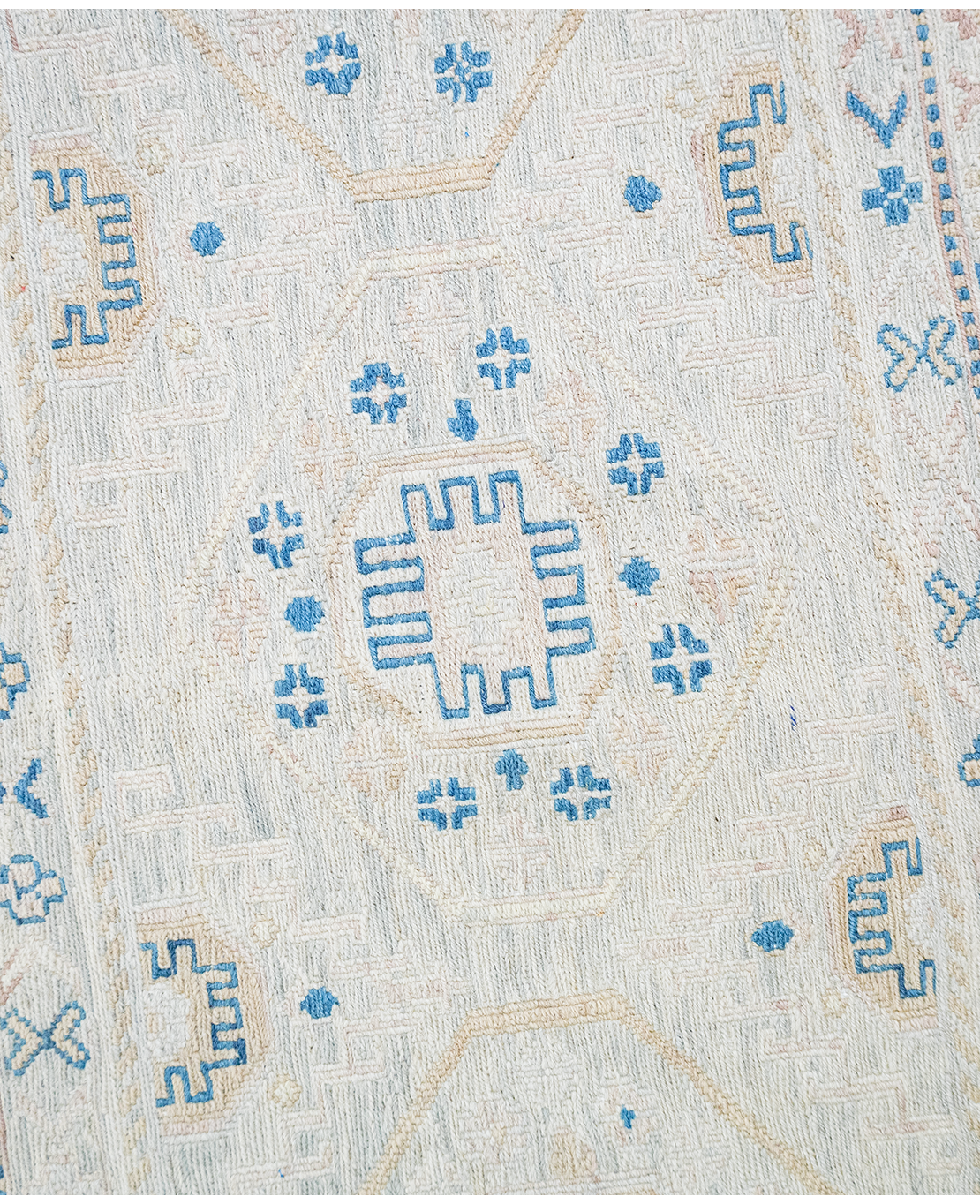
The world of oriental rugs is remarkably rich and diverse. Alongside the best-known knotted Persian rugs, there are also distinctive flatweaving techniques, each with its own character and aesthetic. One of these is the Soumak kilim, which is unique not only in appearance but also in the way it is made.
The Soumak technique originates primarily from the Caucasus region, north-western Iran and certain parts of Anatolia. Its name is associated with the Shahsavan tribes of the Caucasus, who refined this distinctive weaving method over generations.
What exactly is Soumak?
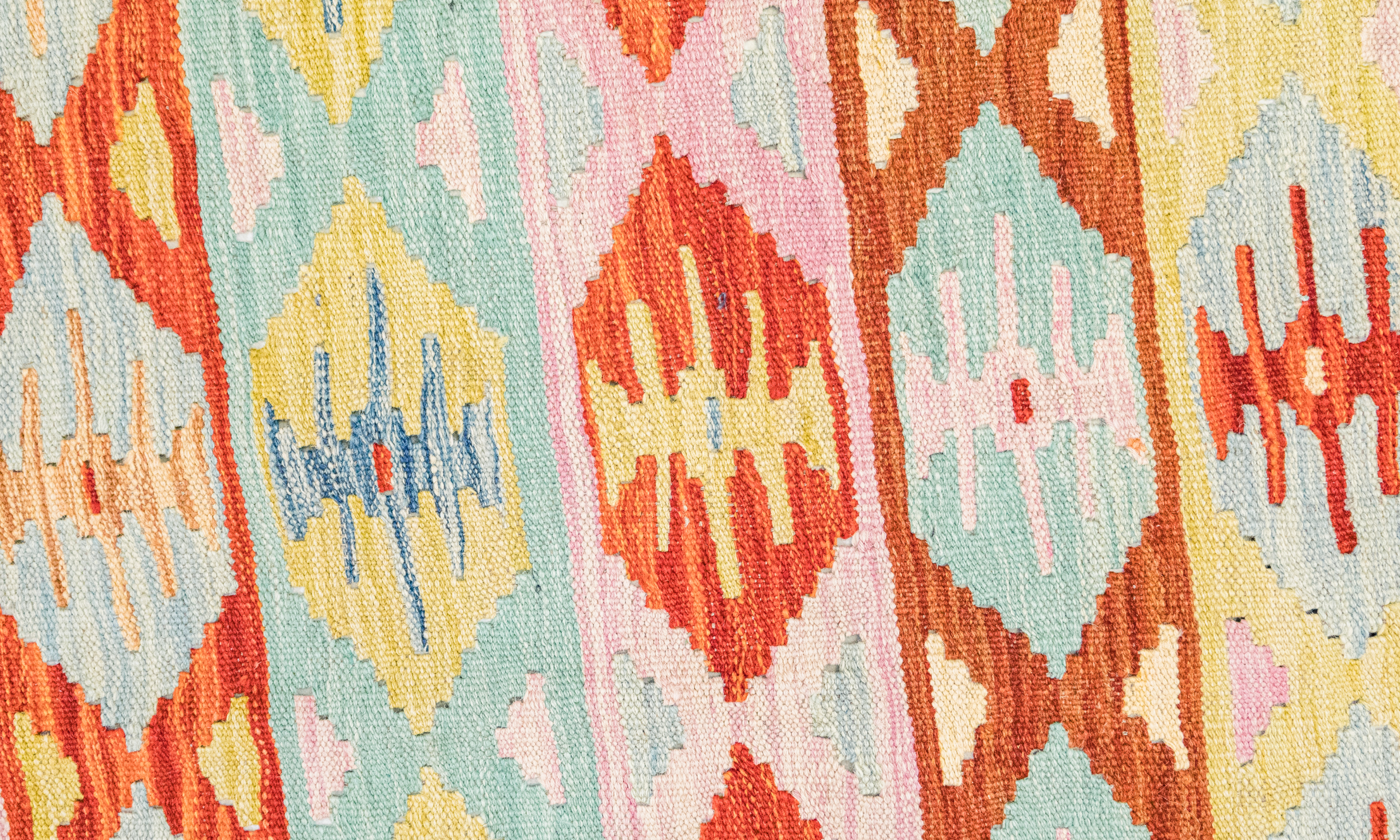
Soumak, also spelt sumak, is a flatweaving technique that falls between traditional kilims and knotted rugs. Although it may resemble a kilim at first glance, its structure is considerably more complex.
In a classic kilim, the weft simply passes between the warp threads, creating a flat, smooth surface. In Soumak weaving, however, the weft is wrapped around the warp threads and then carried back, producing a slightly raised, textured pattern. Loose yarn ends often run across the reverse, which is another characteristic feature of the technique.
This wrapping method creates a thicker, more durable and more distinctive texture. Soumak rugs are therefore more robust than traditional kilims, while remaining lighter and more flexible than knotted rugs.

Materials and production process
Soumak kilims are generally woven on a wool warp using wool weft yarn. Wool’s natural elasticity and resilience ensure the rug’s durability.
Traditional pieces were coloured with vegetable dyes, producing warm, harmonious shades such as deep reds, indigo blues, earthy tones and natural beiges. Over time, these colours age beautifully and blend together, giving the rug an elegant, time-worn appearance.
Creating the patterns requires considerable skill and careful planning. The motifs are often woven from memory rather than from a drawn design, following patterns passed down through generations. This is what gives every piece its unique character.
Characteristic motifs
The patterns of Soumak kilims are not merely decorative elements. The motifs found in traditional pieces carry symbolic meanings and form a visual language of their own.
-
Geometric forms: diamonds, zigzag lines and stylised medallions symbolise order and the structure of the world.
-
Animal figures: stylised birds, goats and ram’s heads represent strength, fertility and protection.
-
Tree of life motif: expresses the connection between heaven and earth and the continuity of life.
-
Protective symbols: small repeating elements traditionally believed to safeguard the inhabitants of the home.
These motifs serve more than an aesthetic purpose; they held personal and communal meaning for their makers. Each Soumak piece is therefore not simply a home textile, but also an object that tells a story.
How does it differ from a classic kilim?
A common question is how Soumak differs from a traditional kilim.
-
A kilim is a completely flat, smooth flatwoven textile.
-
A Soumak is made using a wrapping technique, giving it a slightly raised, textured pattern.
-
Soumak rugs are generally thicker and more durable, but they do not have knotted pile ends like traditional Persian rugs.
This distinctive technique makes Soumak kilims especially decorative: light interacts with their surface differently, while the raised patterns create a more three-dimensional effect and bring the textile to life.

The place of Soumak kilims in modern interiors
Thanks to their distinctive texture and rich patterns, Soumak rugs fit beautifully into both classic and modern interiors. In a clean, minimalist setting, they serve as a striking focal point, while in more traditional surroundings they create a natural sense of harmony.
Summary
A Soumak kilim is more than a simple home textile: it is a living expression of Caucasian and Middle Eastern craft traditions. Its distinctive weaving technique, symbolic motifs and natural materials give it lasting value.
For those seeking more than just a rug—something with history, character and authentic craftsmanship—a Soumak kilim is an excellent choice.
Source: Jamal Abdul Naser
Owner of Kabiri Carpet