Blog
Source: Wikipedia
Aladdin is a poor, idle boy from a city in China. A magician from the Maghreb introduces himself as a friend of Aladdin’s father. He convinces Aladdin and his mother that he wants to help the boy become a wealthy merchant.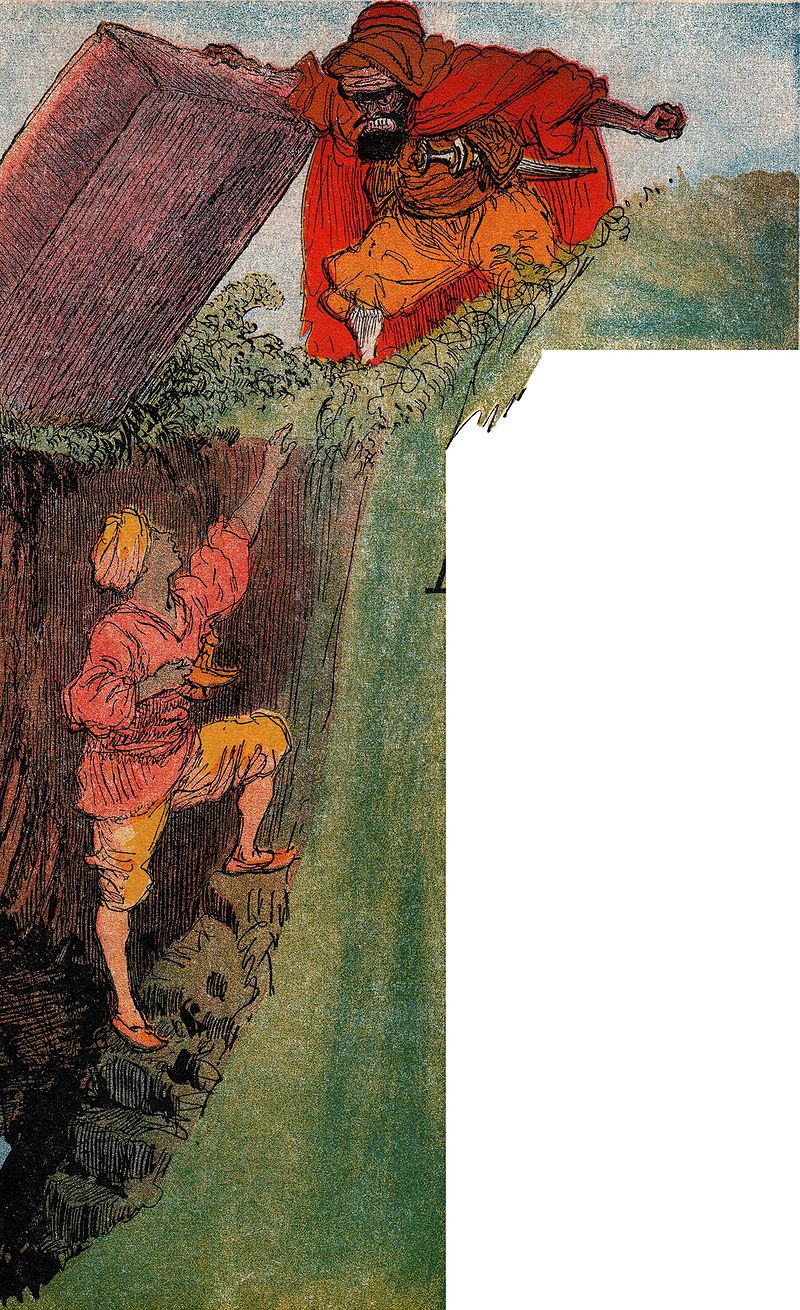
His true aim is very different. He wants Aladdin to retrieve a magical oil lamp hidden inside a cave full of traps. The magician tries to deceive him, and Aladdin becomes trapped in the cave. There, he accidentally rubs a ring that the magician gave him earlier. A genie appears and flies him home with the lamp.
At home, Aladdin’s mother tries to clean the lamp. An even more powerful genie appears and must grant the wishes of whoever rubs it. With the genie’s help, Aladdin becomes rich and marries Princess Badroulbadour, the emperor’s daughter. The genie builds them a magnificent palace, even more wondrous than the emperor’s own home.
The magician returns and tricks the princess into giving him the lamp. She does not know about its power. He orders the genie to transport the palace and all its treasures to the Maghreb.
Aladdin still has the magical ring, so he summons the other genie. This genie cannot reverse the lamp genie’s magic. However, he can take Aladdin to the Maghreb. There, Aladdin defeats the magician and recovers the lamp.
The magician’s brother seeks revenge. He disguises himself as an elderly healer and gains entry to the palace. The princess once again falls for the deception. However, the lamp genie warns Aladdin about the danger.
Aladdin defeats the villain and lives happily with his wife. He later inherits his father-in-law’s throne.
Background
Antoine Galland first published the story of Aladdin in his French translation of The Thousand and One Nights, titled Les mille et une nuits. Galland heard the tale from Youhenna Diab, a Syrian from Aleppo. The French traveller Paul Lucas had brought Diab to Paris.
According to Galland’s diary, he met the Maronite scholar in 1709. Diab then told him the story of Aladdin.[2]
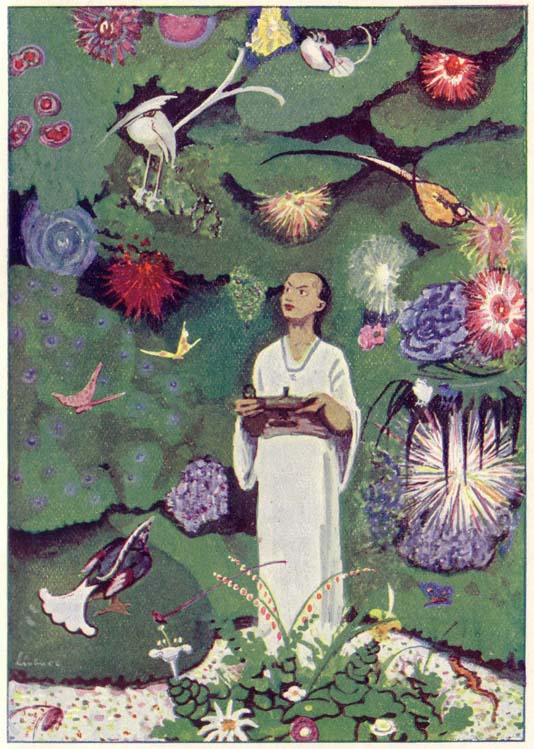
Although the story comes from the Middle East, it takes place in China, and Aladdin himself is Chinese.[3] However, almost every character is Muslim, apart from one Jewish merchant. The story mentions neither Buddhism nor Confucianism. The characters have Arabic names, and the ruler seems more like a Muslim sovereign than a Chinese emperor.
The story may take place in Turkestan, which includes today’s Muslim-majority Xinjiang Uyghur Autonomous Region.[4] However, this theory assumes a level of knowledge about China that an ordinary storyteller probably did not possess.[5] Folktales also often use exotic locations.
The choice of setting may have a symbolic meaning. China could represent the distant East, while the Maghreb symbolises the West. The magician travels an enormous distance to obtain the lamp, which emphasises its immense value.
Other elements also appear widely in folktales from different cultures. These include the hidden cave full of traps and vengeful villains who temporarily steal the hero’s fortune through a trusting woman. Similar stories also exist in Europe, including Hungarian folk tales.
One such tale follows a soldier. A witch lowers him into a passage inside a hollow tree, where he must retrieve a magical source of light, such as a candle or a box of matches.