Blog
Bidjar is a city of around 50,000 inhabitants in the north-western province of Kurdistan. It lies in a fertile valley surrounded by dry mountains and has no major historical monuments. The city primarily serves as a market centre for the surrounding villages.
Its recent history has been dramatic. During the First World War, it was occupied first by Russian forces and then by the Turks, leading to famine and a significant decline in the population. These events are also reflected in the city’s rug-making tradition.
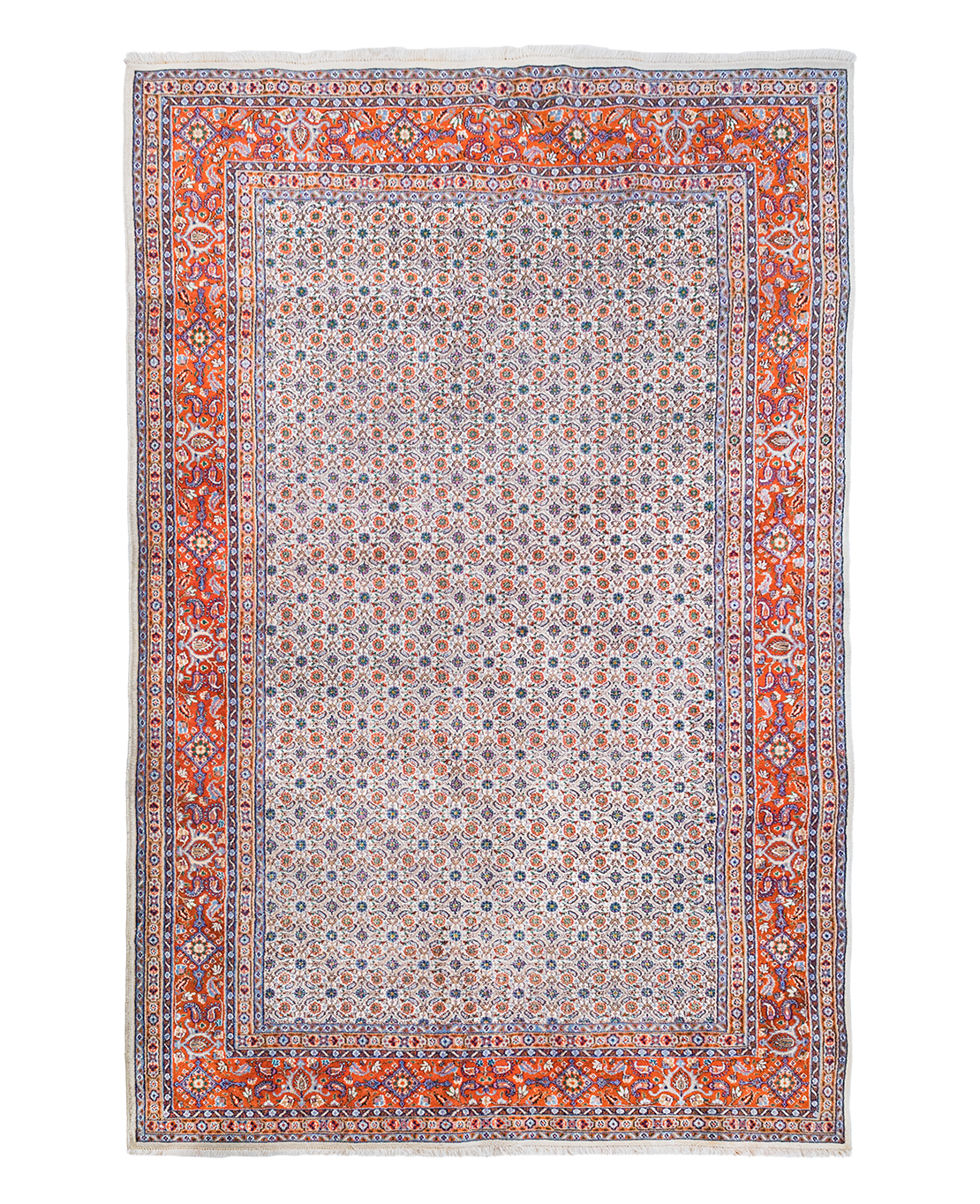
Bidjar rugs have a knot density of between 350,000 and 450,000 knots per square metre. Because they are so tightly knotted, they should always be folded against the direction of the pile, with the fibres facing outwards.
Bidjar rugs contain noticeably more wool than most other rug types. They therefore feel significantly heavier than many other oriental rugs and lie especially firmly once placed on the floor. At the same time, their dense structure provides a resilient and pleasantly soft feel underfoot.