Blog
The origins and historical background of Sarough rugs
Sarough rugs, also spelt Sarouk, are woven in the small village of Saruq, located around 25 miles from the city of Arak. The region has been known as a rug-making centre for centuries, but it gained worldwide recognition in the mid-20th century, when large quantities of Sarough rugs began to be exported to the United States.
Sarough rugs represent one of the highest-quality traditions of central Iranian rug making. Many experts regard them as some of the finest hand-knotted rugs produced in the region. A 19th-century designer named Farahan played an important role in shaping the modern Sarough style. By introducing the central medallion motif, he gave local rug making a new direction and helped distinguish Sarough rugs from the equally popular Keshan rugs.
Patterns, colours and structural characteristics
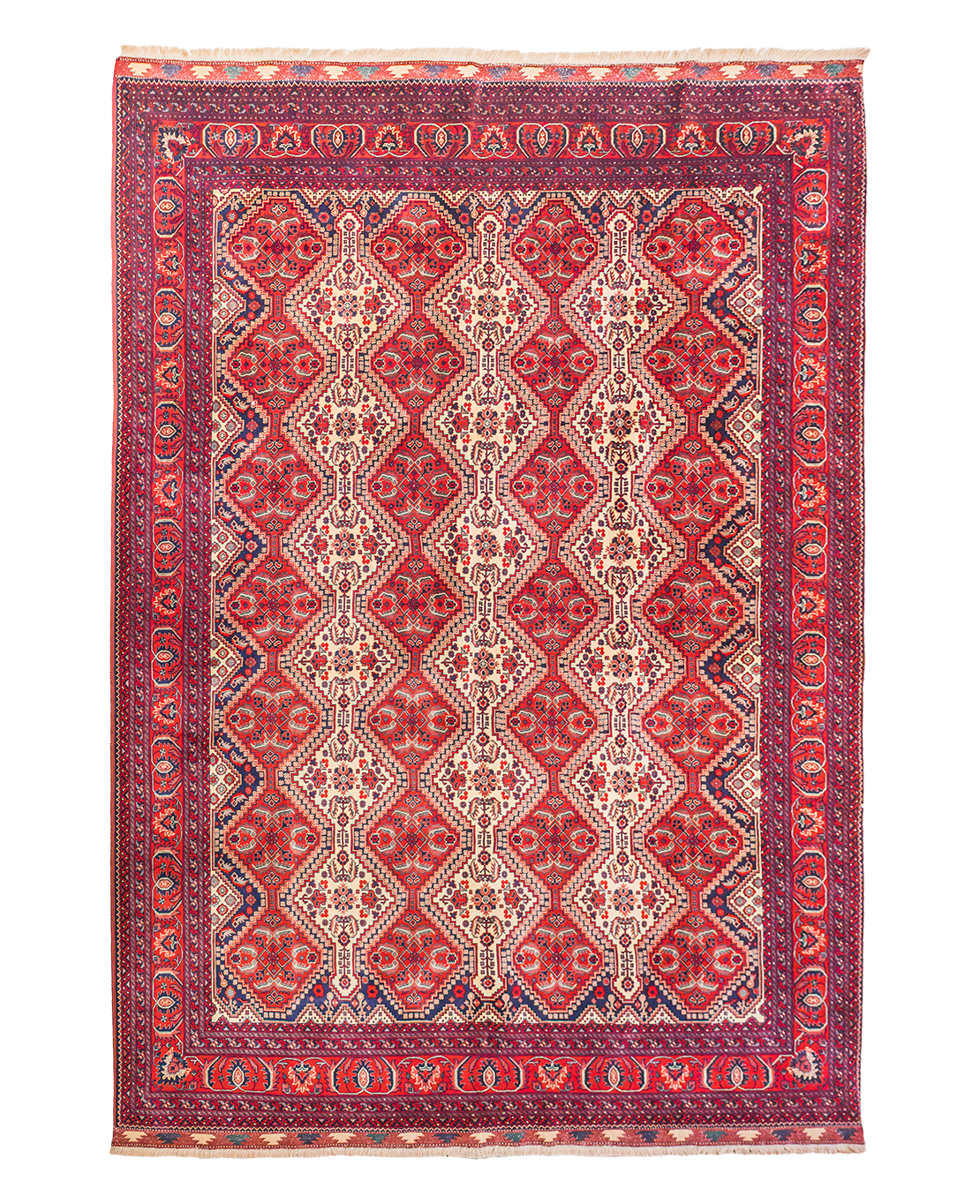
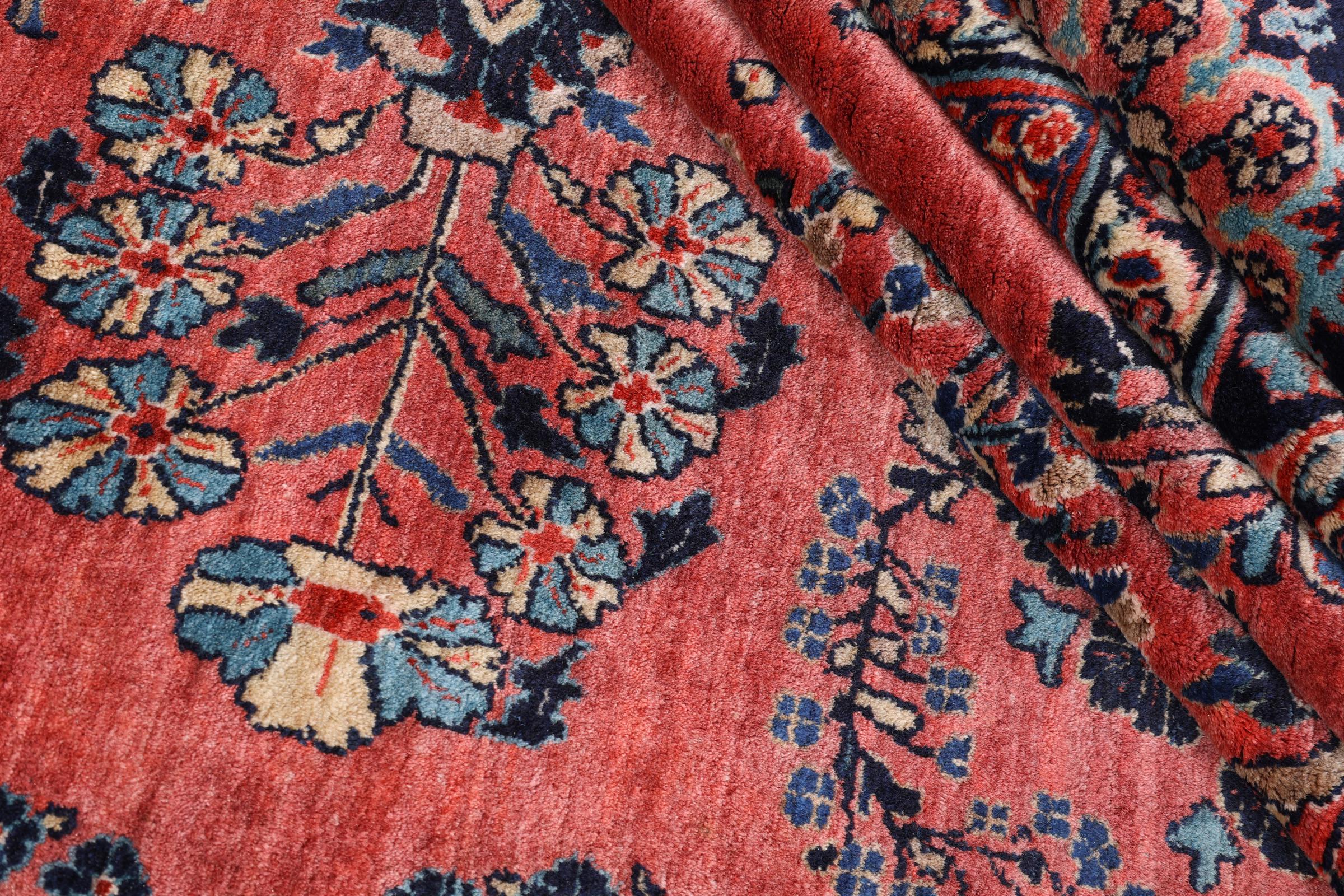
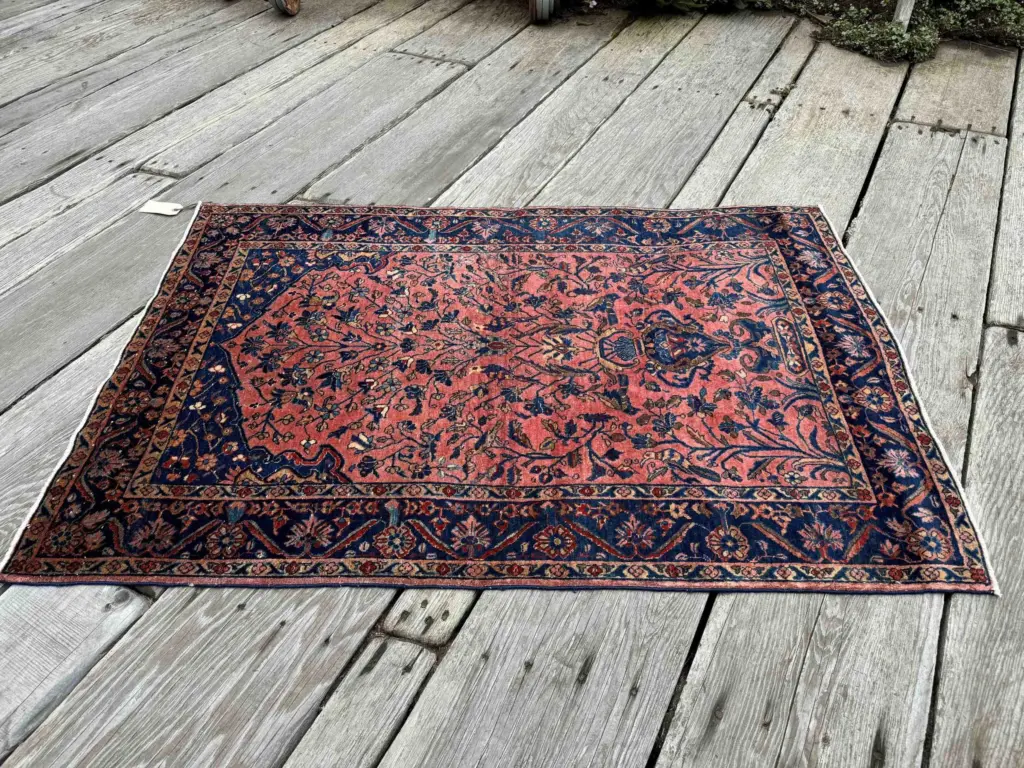
Sarough rugs feature an exceptionally rich and varied range of patterns. Common motifs include gul hannai, boteh (paisley) and herati designs, arranged either as repeating patterns or around a central medallion. The medallions may be diamond-shaped, hexagonal, circular or oval, and are often surrounded by organic, plant-inspired ornamentation. The knot density typically ranges from 150,000 to 250,000 knots per square metre, allowing for both durability and richly detailed workmanship. The colour palette is based on classic Persian shades, dominated by deep red, burnt orange, beige, brown, blue and green. The motifs are often highlighted with contrasting outlines in colours such as pink, turquoise or yellow, adding depth and visual dynamism to the composition.
Which rooms are Sarough rugs recommended for?
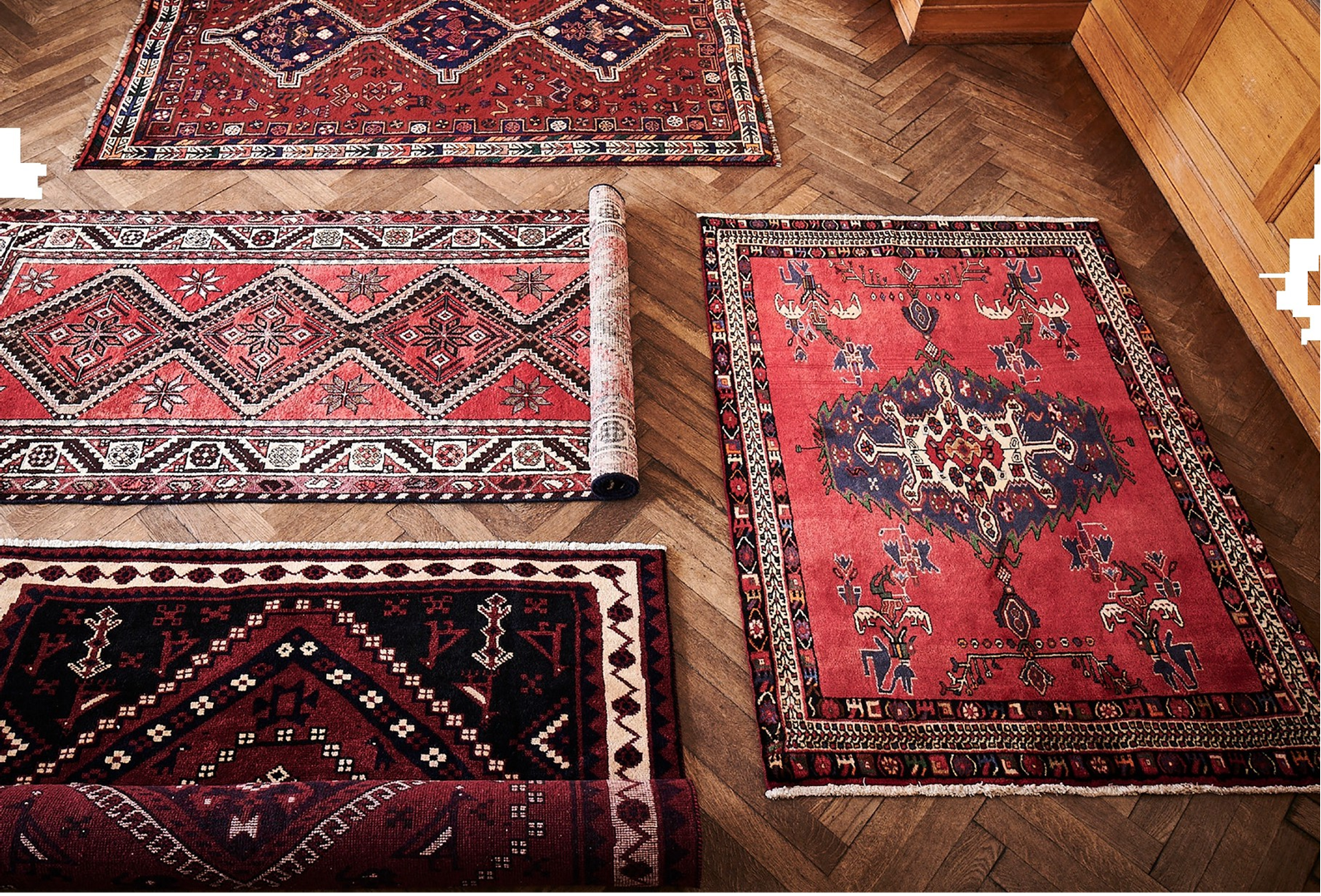
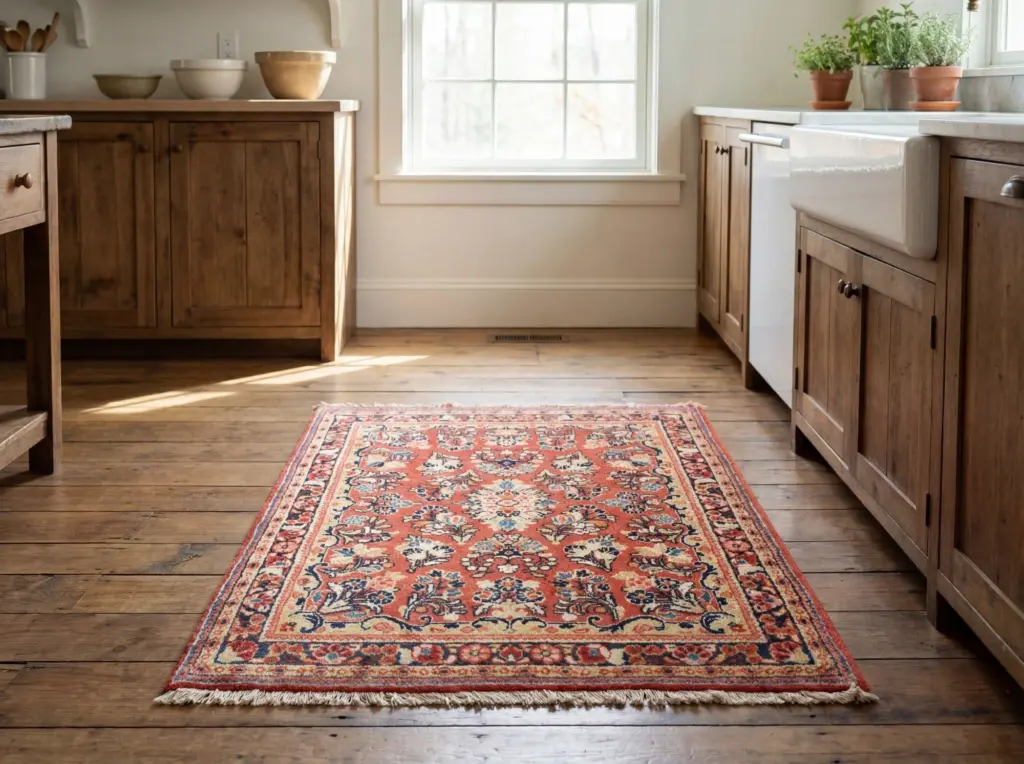
Thanks to their elegant, classic appearance, Sarough rugs are particularly well suited to formal interiors. They look especially impressive in living rooms, dining rooms, reception rooms and larger entrance halls, where their rich patterns and colour palette can become the central feature of the space. Warm earthy tones and deep reds create a welcoming yet refined atmosphere, while the rugs serve as a strong focal point in both classic and modern interiors. They pair particularly well with wood, leather and natural textiles. Thanks to their durability, Sarough rugs are suitable not only as decorative pieces but also for everyday use, making them a reliable and lasting investment.
The value and distinctive qualities of Sarough rugs
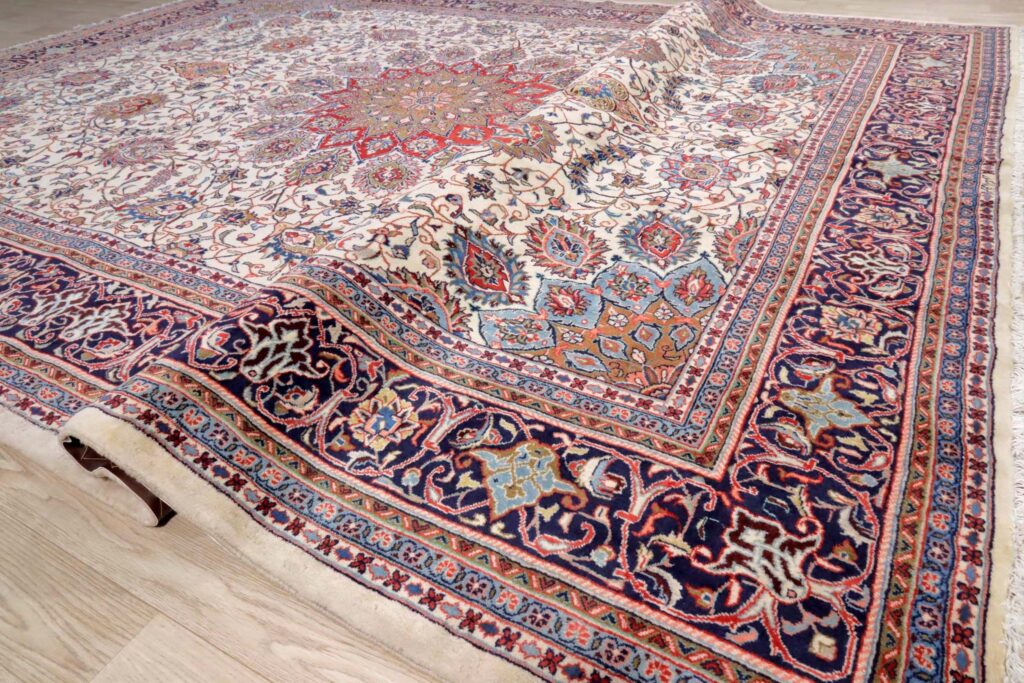
One of the defining qualities of these rugs is their refined pattern work and carefully balanced composition. The classic medallion structure, rich botanical ornamentation and harmonious colour palette give each piece a timeless elegance. The influence of Farahan design traditions can still be seen in Sarough rugs today, combining classic Persian aesthetics with pattern structures adapted to modern tastes. This balance has made them especially popular on the international market. A Sarough rug is therefore more than an interior furnishing; it represents one of the finest and most internationally recognised traditions of Persian rug making, retaining its beauty and value for many years.
Source: Jamal Abdul Naser
Owner of Kabiri Carpet