Blog
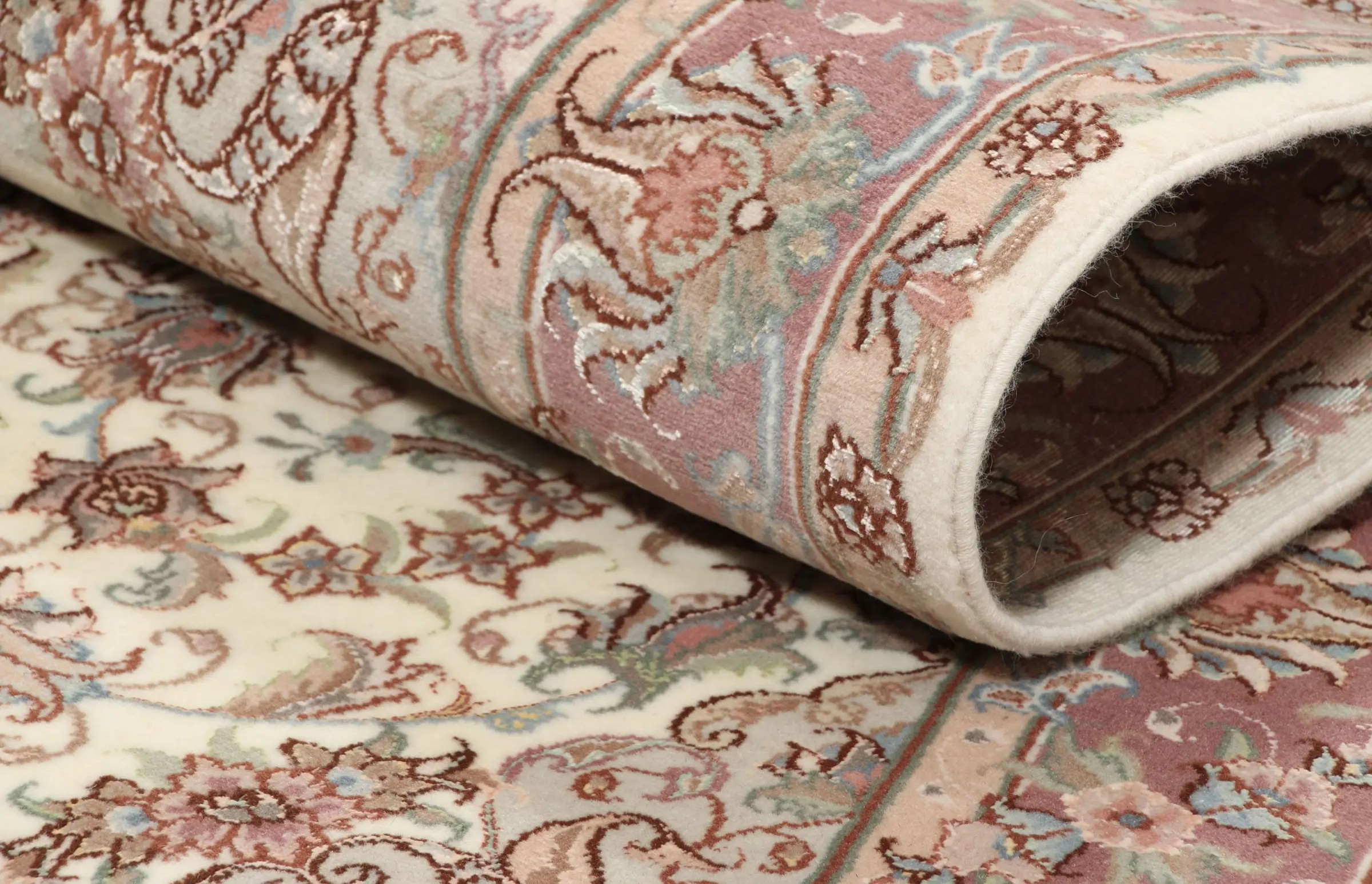
The name Tabriz evokes more than an Iranian city; it represents a cultural heritage that has embodied the essence of oriental rug weaving for generations. Tabriz, one of Iran’s largest and most prestigious cities, lies at the heart of the historic Azerbaijan region, where rug weaving is not merely a craft but a way of life. The city is renowned worldwide for its exceptional hand-knotted rugs, which have earned their place among luxury goods through their refinement, intricate patterns and outstanding use of materials.
Mahi pattern – Geometric elegance and symmetry
One of the best-known varieties of Tabriz rugs features the mahi, or “little fish”, pattern, based on an arrangement of finely detailed Herati motifs. The Herati motif is a densely repeated, harmonious design, usually centred on a stylised flower or diamond surrounded by four curved leaves. These leaves resemble fish, which is where the name mahi, meaning “fish”, originates. Traditionally, the motif symbolises life, fertility and harmony, although its meaning may vary by region and period.
This geometric pattern covers the entire surface of the rug, creating a refined balance between traditional and modern visual language. Mahi rugs typically have a knot density of 350,000–500,000 knots per square metre, equivalent to 40–50 raj in Tabriz terminology. One raj indicates the number of knots measured across approximately 7 centimetres, so a 50-raj rug already represents exceptional detail and meticulous craftsmanship.
Floral motif – The harmony of silk and wool
Floral Tabriz rugs celebrate the forms of nature, particularly through pastel colours and floral compositions arranged around a central medallion. Silk is often used to highlight the finer details, adding greater visual depth to the rug. The finest pieces can reach a knot density of 750,000–1,300,000 knots per square metre, equivalent to 60–80 raj, placing them firmly in the realm of works of art. The Bijan collection, for example, is made from premium merino kork wool, which provides an exceptionally soft feel and outstanding durability.

Hadji Jalili and the golden age of Tabriz
In the second half of the 19th century, around 1875, the name of the Haji Jalili weaving workshop became synonymous with the golden age of Tabriz rugs. This renowned family workshop created some of the best-known and most sought-after antique Tabriz pieces, unsurpassed in both design and use of materials. Hadji Jalili rugs are masterpieces of classical Persian craftsmanship.
Tabriz Royal and Tabriz Indi – Reinterpreting tradition in India
Today, many weavers continue to draw inspiration from the Tabriz style, including the hand-knotted Tabriz Royal and Tabriz Indi rugs made in India. Royal varieties use classic colour tones that blend beautifully with Scandinavian and modern interiors. These rugs typically have a knot density of 250,000–350,000 knots per square metre, while Indi versions range from 150,000 to 250,000 knots per square metre. Although a trained eye can recognise the difference, both varieties create an impressive visual effect. The distinctive hook-shaped tool used by Tabriz weavers makes knotting easier and enables them to achieve a high knot density.
The meeting of heritage and modernity – Summary
Explore our Tabriz collection and let a unique story become part of your home!
Source: Jamal Abdul Naser
Owner of Kabiri Carpet