Blog
The origins and distinctive appearance of Seneh rugs
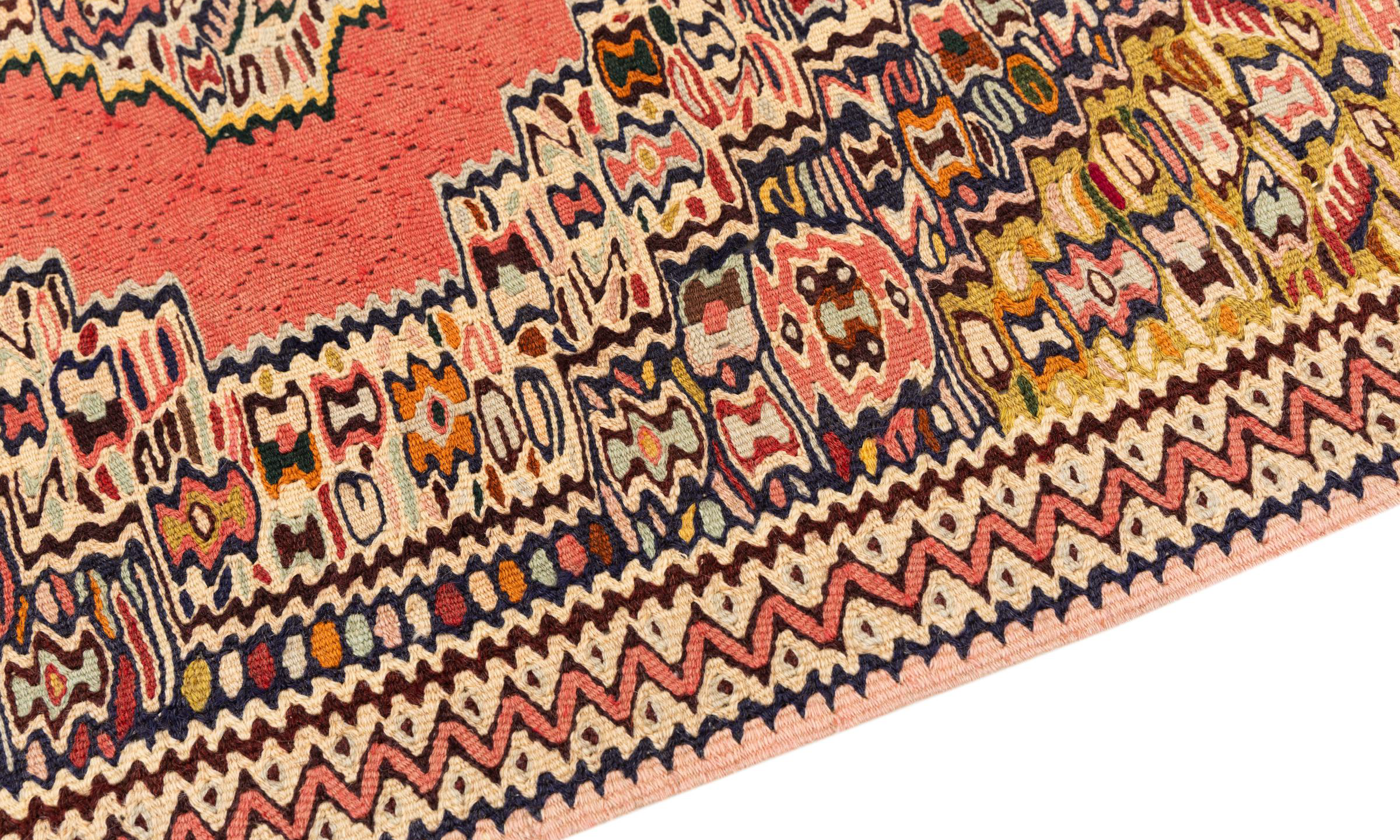
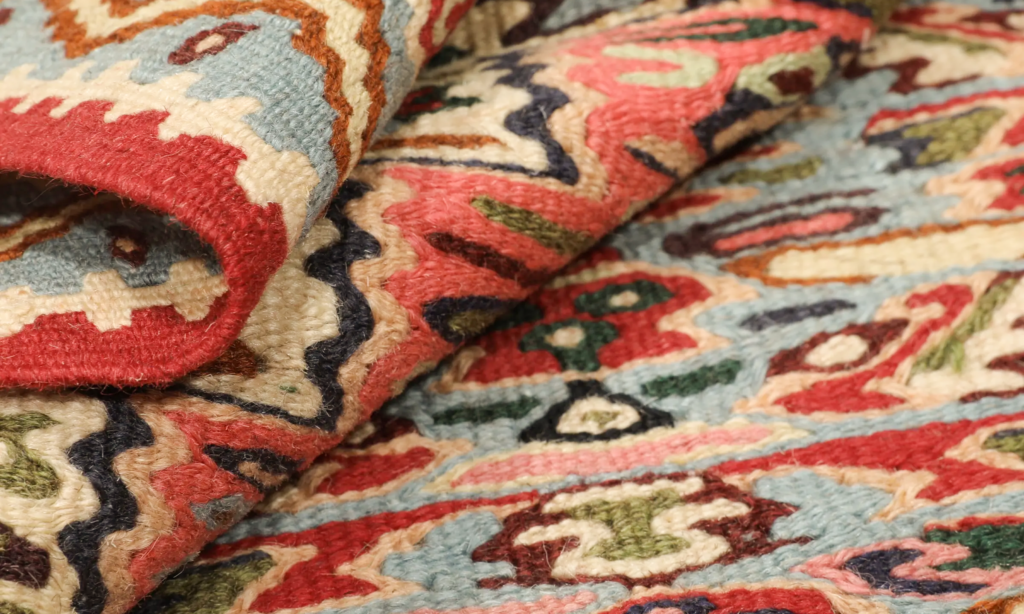
Seneh rugs originate from Sanandaj, also known as Seneh, the capital of Kurdistan Province in western Iran and one of the region’s most important rug-making centres. A significant part of the local population is Kurdish, particularly communities associated with the Guran tribe, who have preserved the traditions of handweaving for centuries. Seneh rugs are easily recognised by their distinctive knotting technique and the unique combination of wool and colours used in their production. The reverse side often has a coarser, more textured appearance because the wool is tightly hand-spun before knotting, creating a distinctive surface.
The colour palette is characterised by deep tones such as dark blue, dark green and deep red, often contrasted with white. Seneh wool is considered one of the finest types of Eastern wool: strong, durable and naturally lustrous. These qualities are shaped by the high-altitude environment, sparse vegetation and extreme temperature conditions. This natural material makes the rugs especially resilient and long-lasting.
Patterns, interior design applications and style recommendations
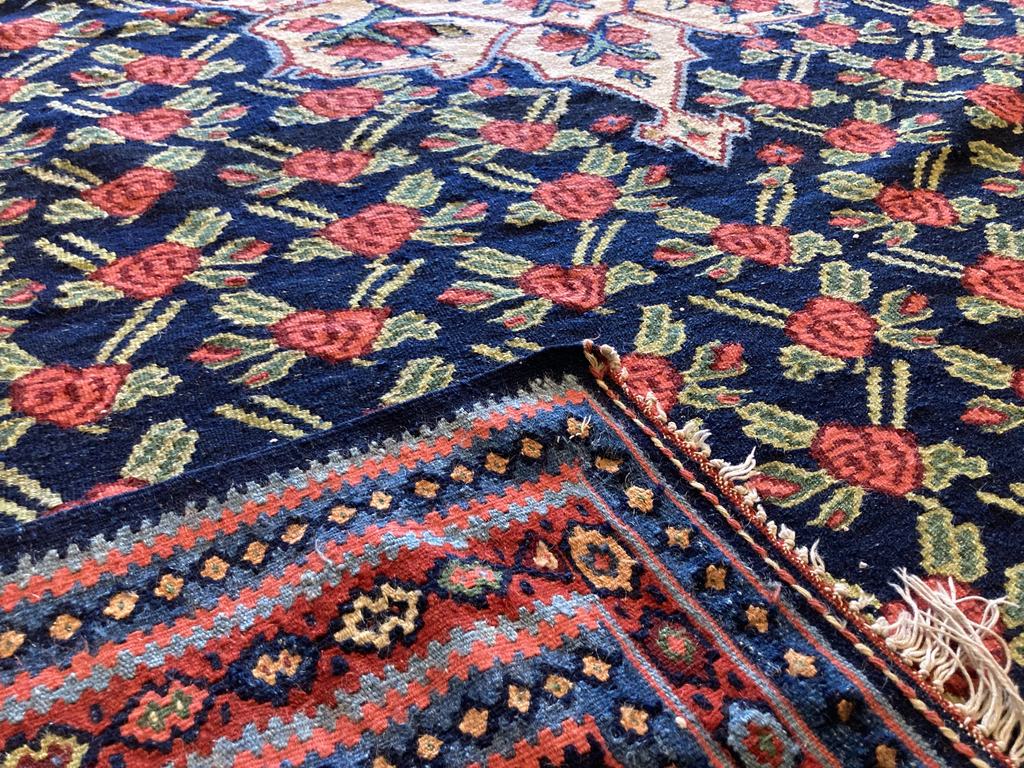
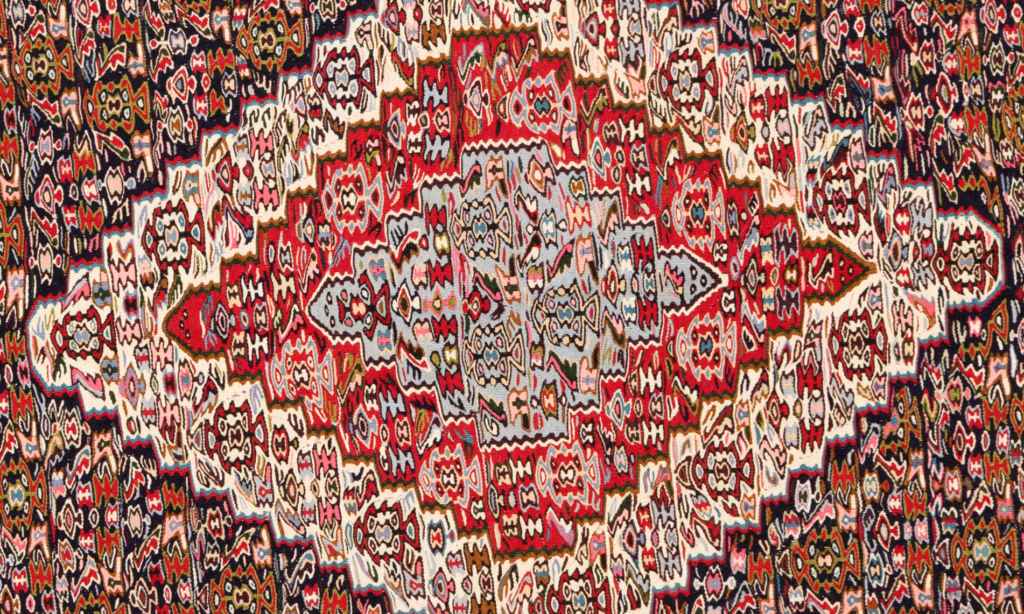
Seneh rugs are traditionally made using the Ghiordes knotting technique, although the Seneh knot is also used, allowing for even finer detail. A central element of their design is often the Herati pattern, which consists of repeating geometric and floral motifs, frequently arranged around a medallion in layered compositions.
From an interior design perspective, Seneh rugs work particularly well in distinctive, elegant spaces where their deep colours and intricate patterns can become a true focal point. They are ideal for classic, vintage or eclectic interiors, but can also add strong contrast and warmth to a clean, modern setting. They look especially striking as a central rug in a living room, beneath a large dining table or in a study, where their subtly dark tones create a calm yet characterful atmosphere. A Seneh rug makes it easy to create a timeless and elegant interior that feels both natural and refined.
The cultural and historical significance of Seneh rugs
Seneh rugs are not merely interior furnishings, but one of the most important elements of Kurdish culture and Persian rug-making heritage. During the 19th century, they gained particular recognition for their fine craftsmanship and diverse patterns, which were also highly valued in contemporary trade. Modern Seneh rugs continue to preserve the strength and character that have defined the region’s craft traditions for centuries.
A Seneh rug therefore represents not only aesthetic value, but also a living cultural heritage, carrying the history, way of life and craftsmanship of the Kurdish highlands in every knot.
Sourve: Jamal Abdul Naser
Owner of Kabiri Carpet