War rugs

War rugs show the meeting of traditional weaving and contemporary history. The conflicts of the region are transformed into visual storytelling.

An article from 444.hu

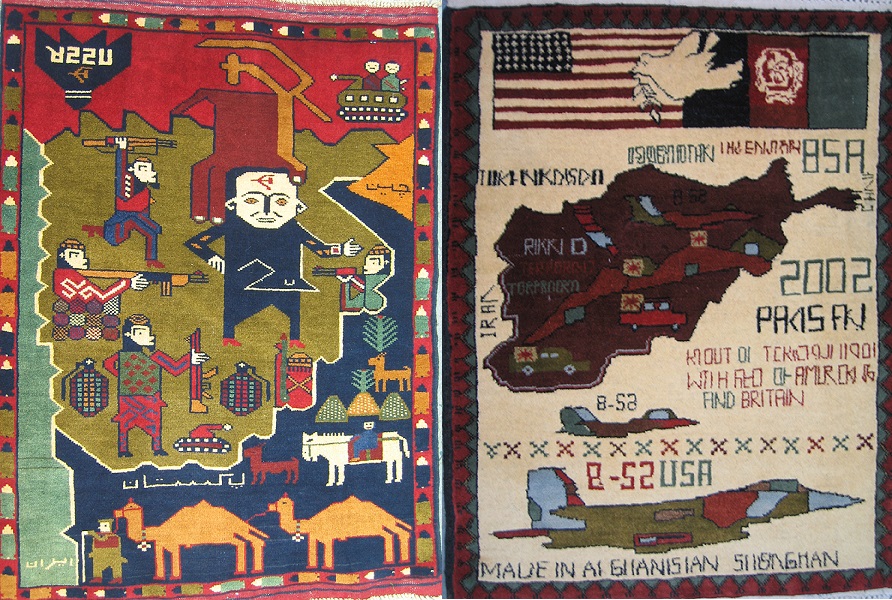
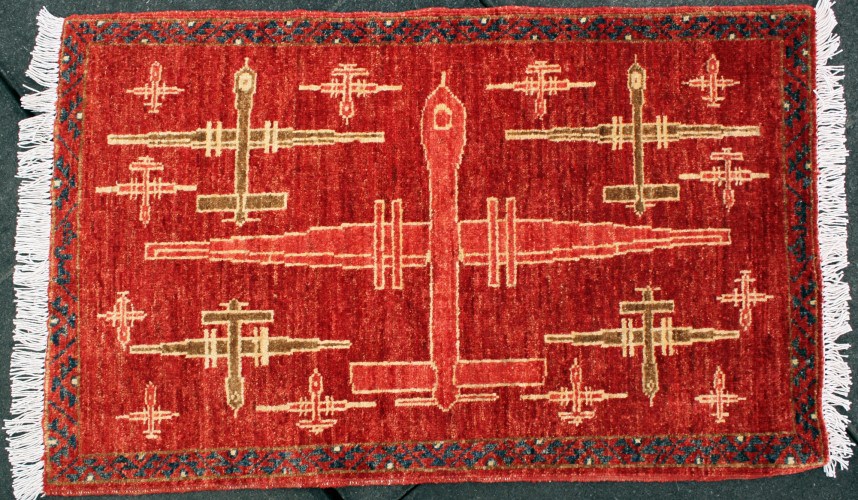
After the Soviet invasion of 1979, Afghan rug weavers began depicting modern military technology in their work. Alongside tanks, Kalashnikov rifles and helicopters, drones have now also appeared in woven designs.

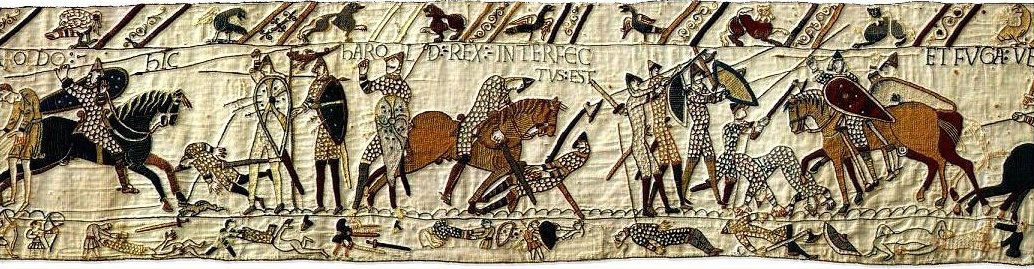
Of course, the appearance of the most advanced military technology of an era in textile and tapestry art is nothing new, as the Bayeux Tapestry demonstrates. The roughly 70-metre-long tapestry was probably made between 1070 and 1082 and tells the story of the Norman conquest of England in 1066 in remarkable detail. Its makers carefully documented the Normans’ equipment and weapons.

A

Detail from the 70-metre-long, 11th-century Bayeux Tapestry. King Harold II of England falls at the Battle of Hastings. (Photo: Wikipedia)

After the terrorist attacks of 11 September 2001 and the US-led war against the Taliban and Al-Qaeda, the Twin Towers also began to appear in rug designs.
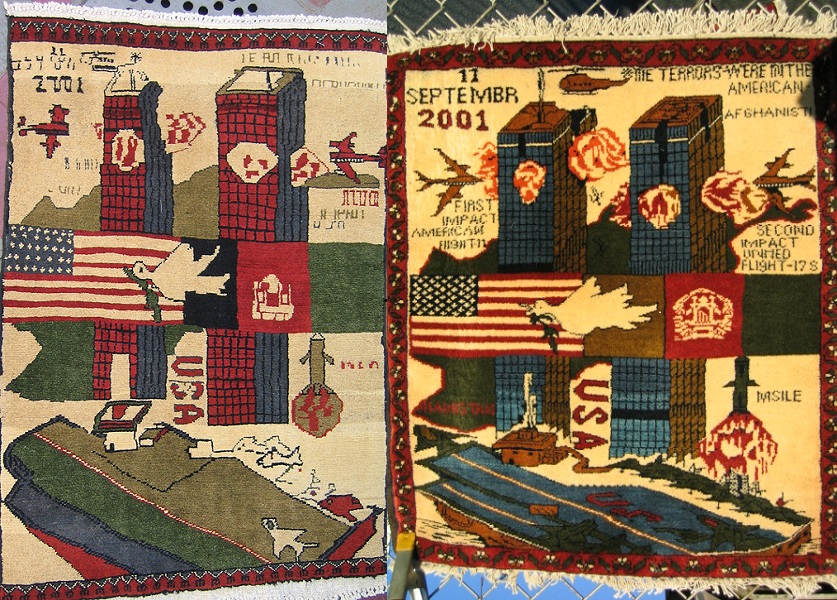
Twin Towers. Photo by Kevin Sudeith, courtesy of warrug.com.            More Twin Towers. Photo by Kevin Sudeith, courtesy of warrug.com.
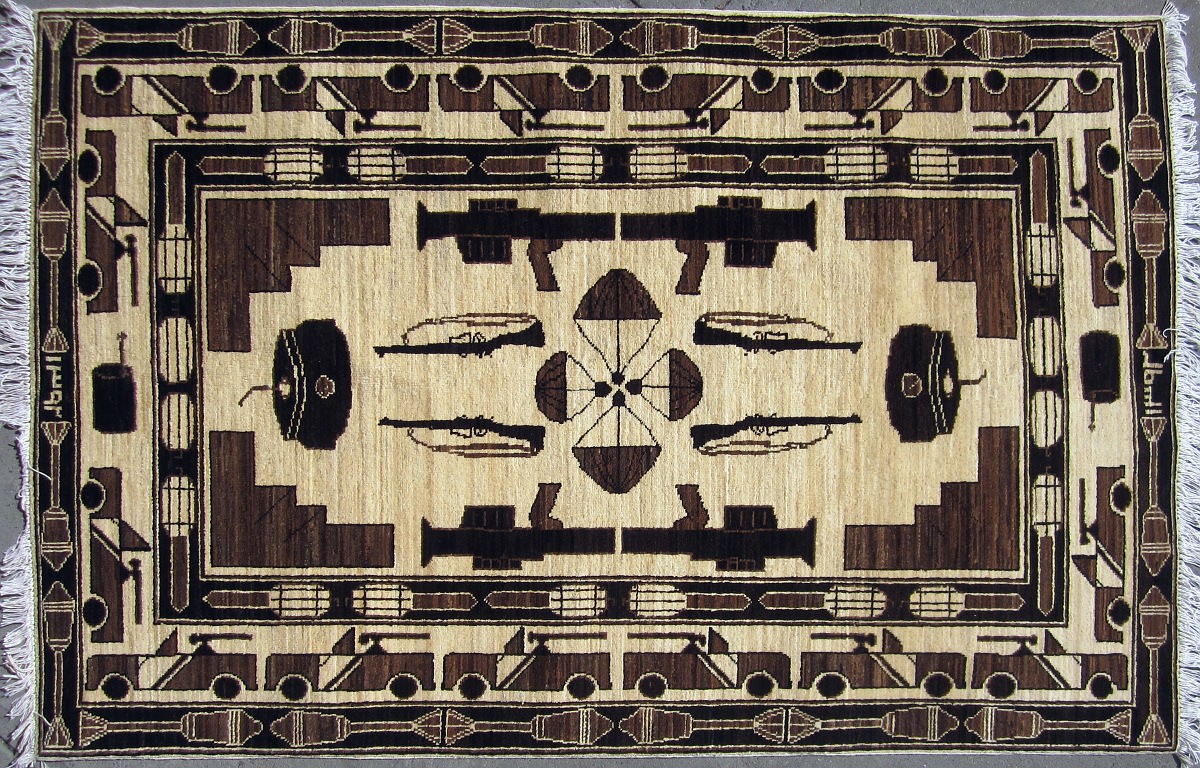
A beautiful Turkmen rug from Afghanistan, featuring technical-style jeeps, rocket launchers and parachutes. It can be yours for $750. Photo by Kevin Sudeith, courtesy of warrug.com.
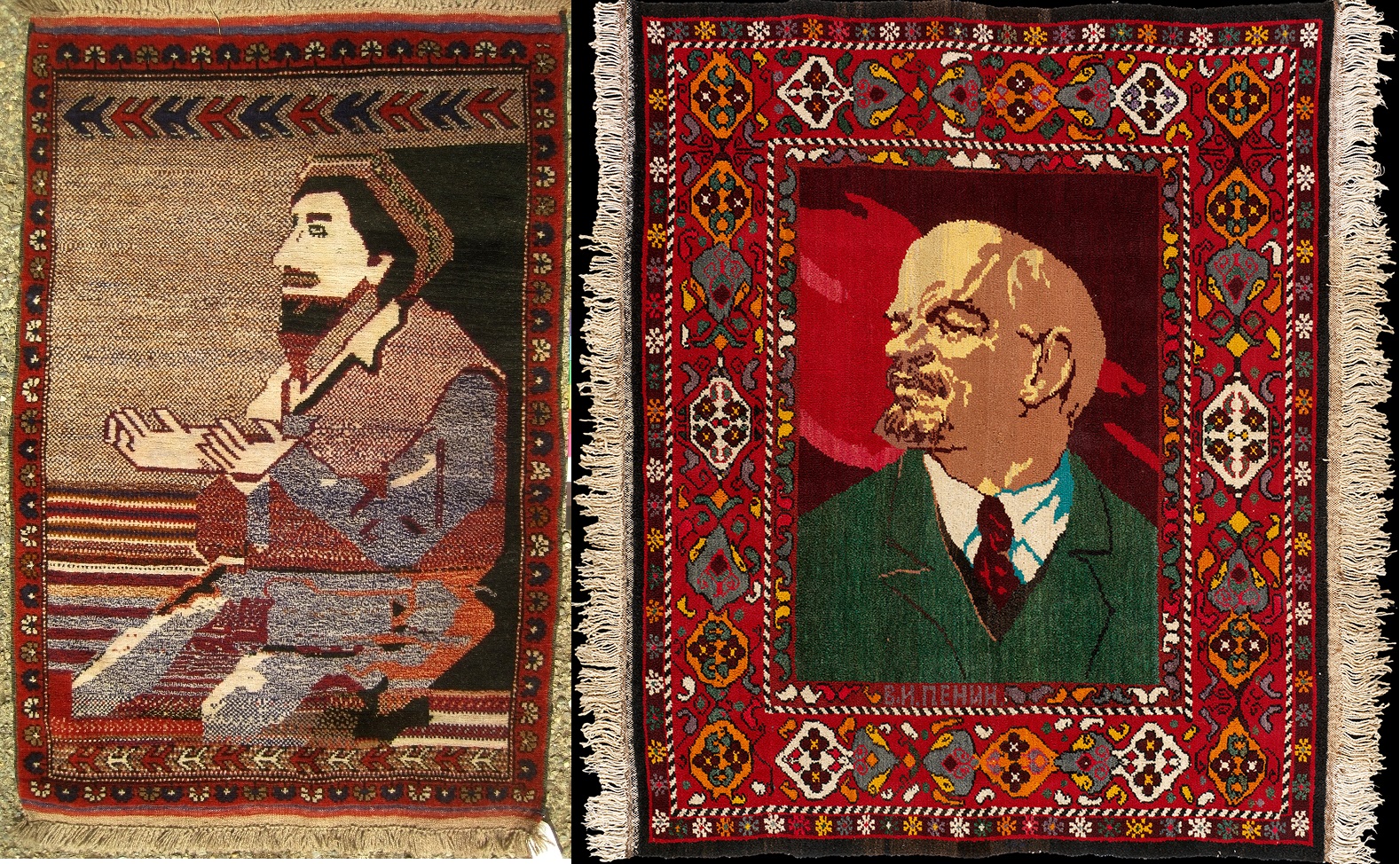
A modern Afghan rug depicts the Tajik Ahmad Massoud during prayer. Portraiture has a long tradition in the region, while an Uzbek rug from 1960 pays tribute to Lenin. Photo by Kevin Sudeith, courtesy of warrug.com.
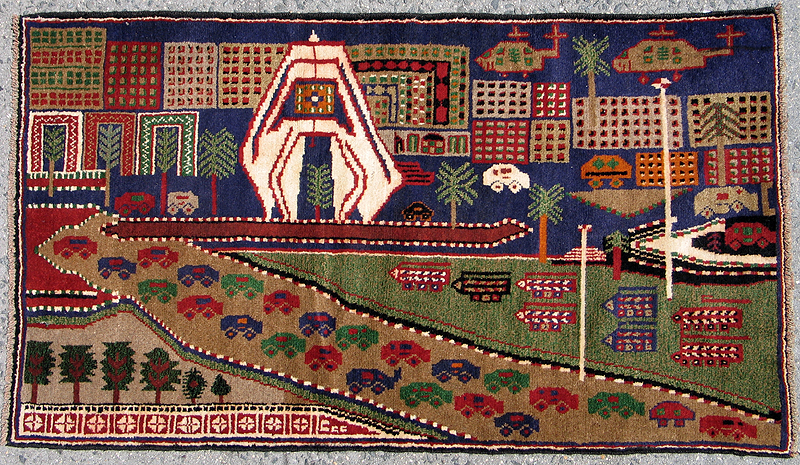
A 2005 rug shows NATO helicopters patrolling above Kabul. Photo by Kevin Sudeith, courtesy of warrug.com.
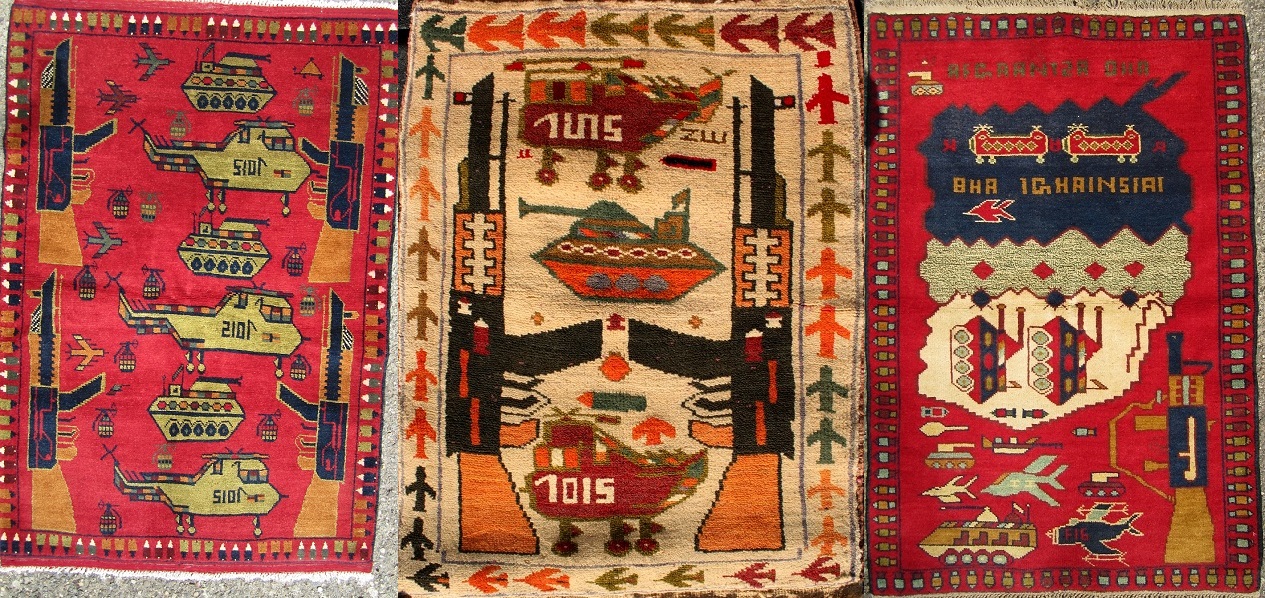
Three beautiful Turkmen rugs. The first two feature Kalashnikov rifles, tanks and helicopters. The hand-grenade motifs on the rug on the far left are particularly striking. The rug on the far right, also Turkmen, depicts the caves of Tora Bora.

The story of the Soviet and American invasions, told through a rug. Photo by Kevin Sudeith, courtesy of warrug.com.
Even drones have now become part of rug art. Photo by Kevin Sudeith, courtesy of warrug.com.
Source: 444.hu

Szeretne elsőként értesülni a legújabb híreinkről és linformációinkról?

Cikkeink hasonló témában

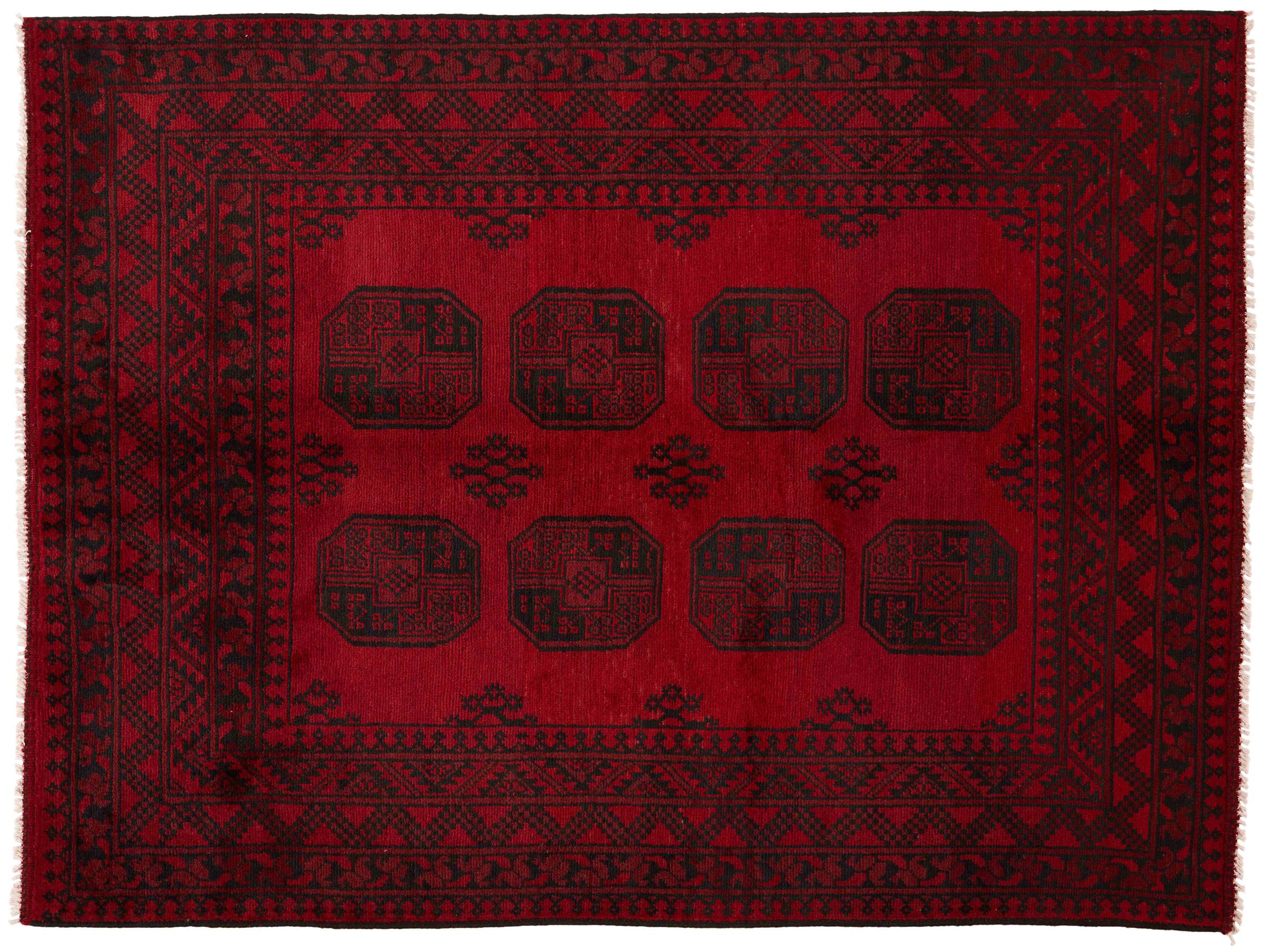
Aktscha rugs – Warm-toned classics of Turkmen tradition

Aktscha rugs are a living expression of Turkmen nomadic traditions, with every knot carrying the heritage of Central Asian rug culture. Their deep red ground and traditional gul motifs create a bold yet harmonious visual character. Each piece brings individuality and a sense of history into the home.

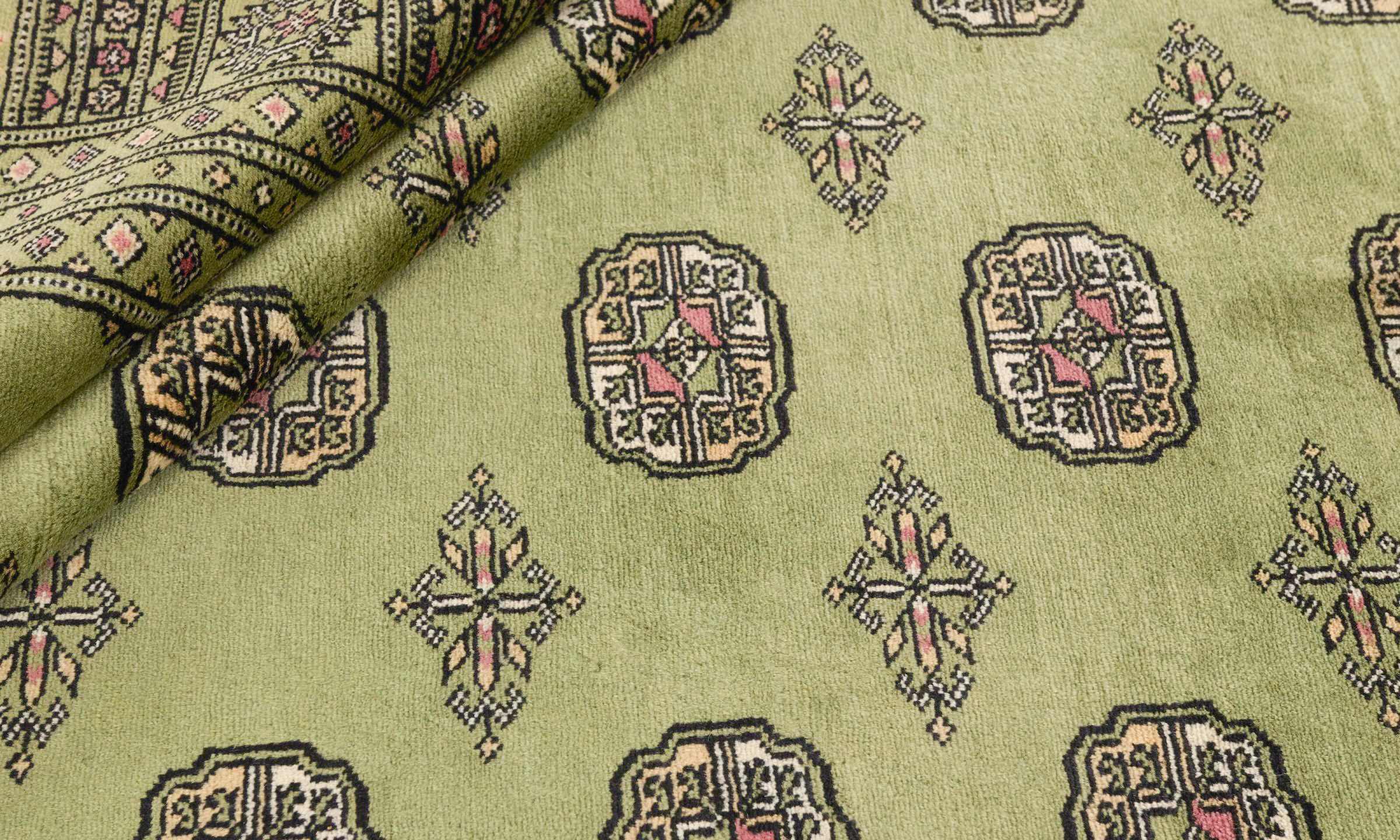
2-ply and 3-ply Pakistani rugs – Soft wool and harmonious oriental patterns

These rugs carry forward the refined legacy of Central Asian nomadic traditions, where the orderly simplicity of Tekke and Bokhara patterns meets Pakistani craftsmanship. Their warm colours and soft wool create a cosy, balanced atmosphere.

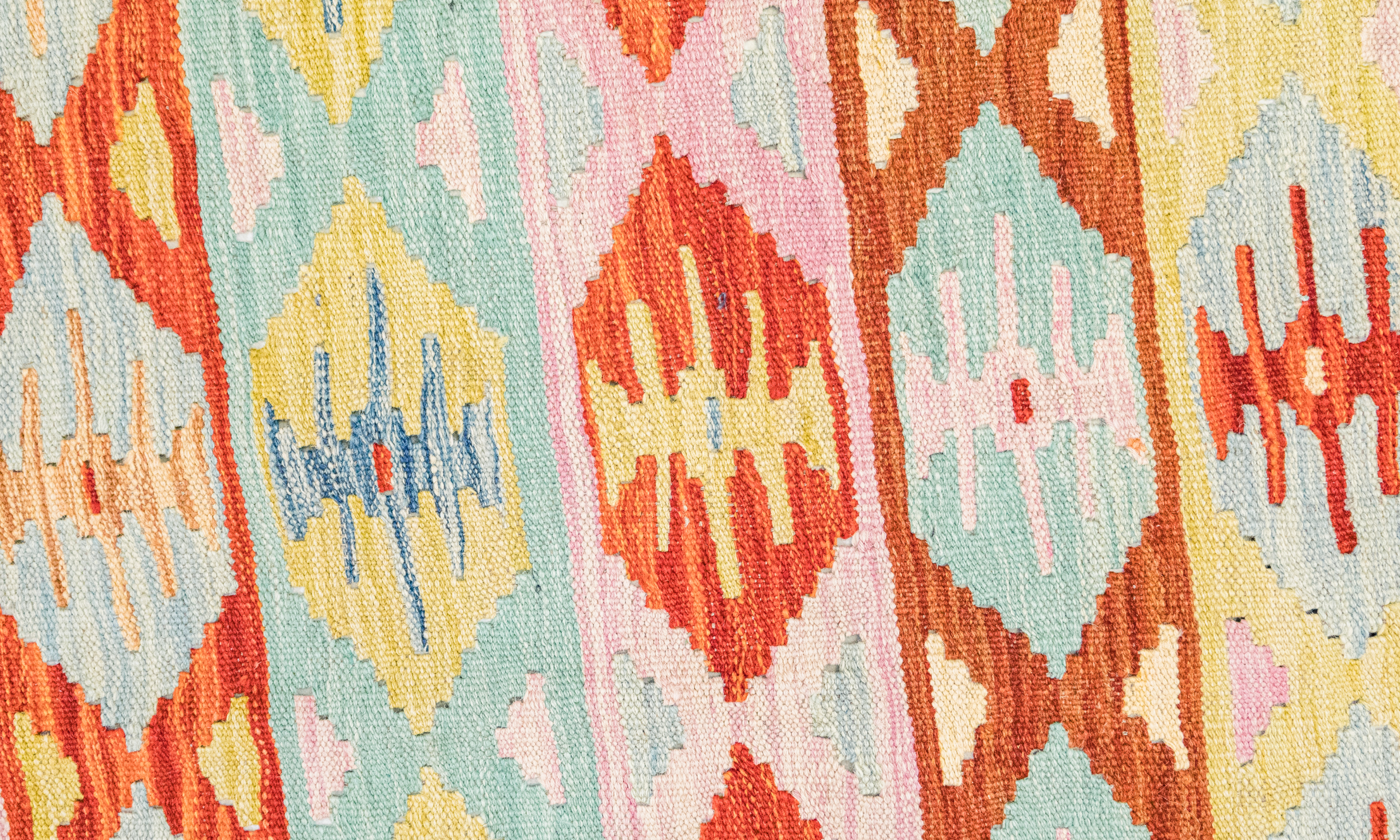
Afghan kilim rugs – Ancient nomadic weaving traditions in modern homes

Afghan kilim rugs represent one of the oldest forms of Eastern nomadic weaving tradition, featuring a flat, reversible construction and geometric patterns. Durable and easy to use, their natural materials make them a timeless choice for both modern and classic interiors.

Ezek érdekelhetnek még

Ez is érdekes lehet

Heriz rugs – Bold Persian geometry and timeless strength

×
×

Cart