Medallions and motifs – The art of Keshan woven into every thread

Keshan is one of Iran’s most important centres of craftsmanship, where the tradition of Persian rug weaving has flourished for centuries through artistic medallion designs, natural colours and exceptional attention to detail.

Keshan, also known as Kashan, is a city of around 300,000 inhabitants in central Iran, in Isfahan Province. It lies at a low elevation and experiences extremely hot summers. Traditionally, local people reduced the effects of the summer heat by building their homes partly below ground level.

Keshan has long been one of the leading centres of Persian craftsmanship and is particularly renowned for its rugs and other traditional handmade products. The villages surrounding the city lie along the main road between Qom and Isfahan in central Iran, while to the east the region borders Iran’s largest desert.
Keshan became renowned not only for its craft traditions but also for its remarkable cultural and historical significance. The city is one of the ancient cradles of Persian civilisation and has been inhabited since antiquity. It flourished particularly during the Safavid dynasty, when numerous mosques, bathhouses and caravanserais were built. Many of these structures still stand today, bearing witness to Keshan’s former golden age.

Although the production of hand-knotted rugs declined during the 20th century, the craft of Keshan rug making continues to thrive. Beautiful pieces are still created today, faithfully following the traditions of earlier masters. They are often decorated with delicate medallion designs or tapestry-like scenes depicting human and animal figures.

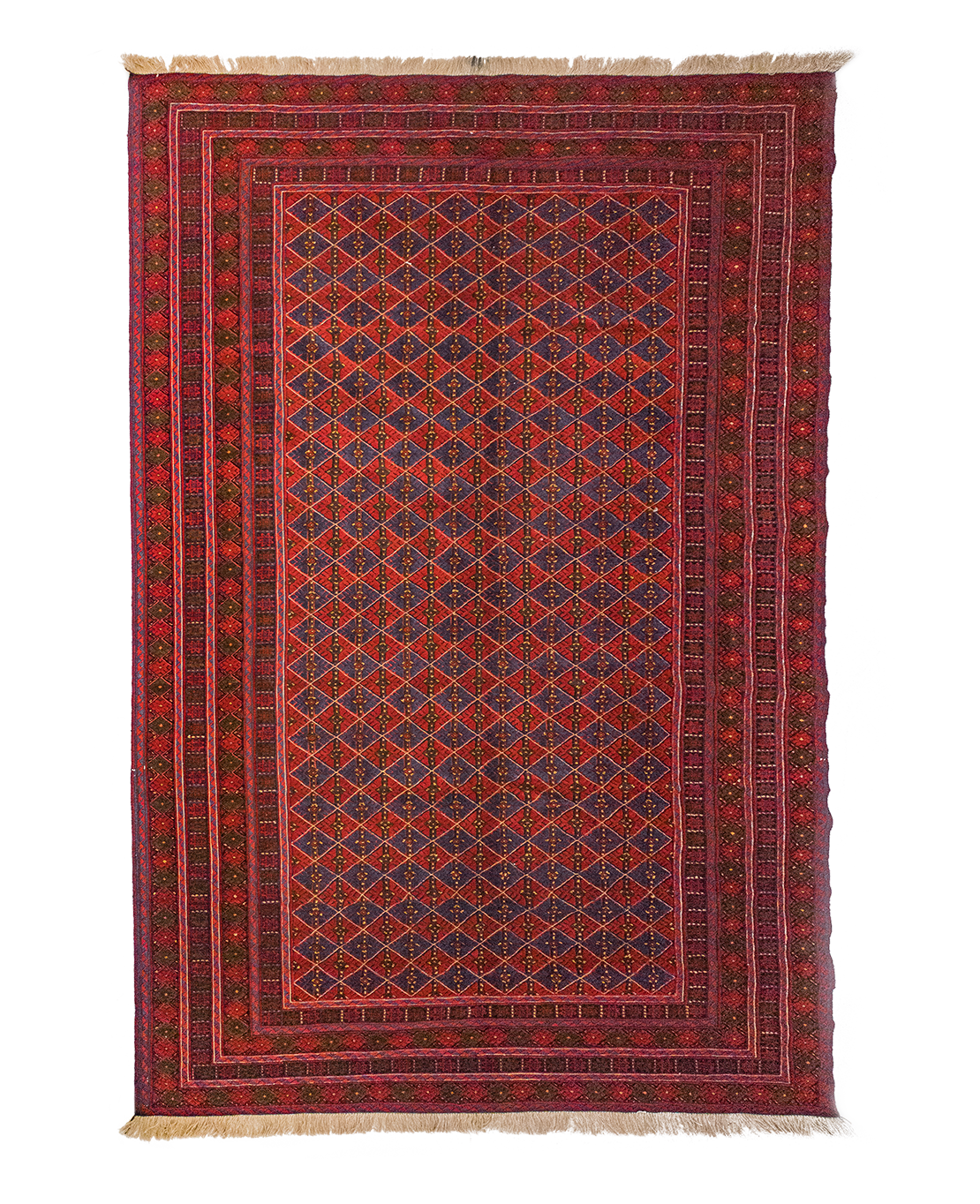
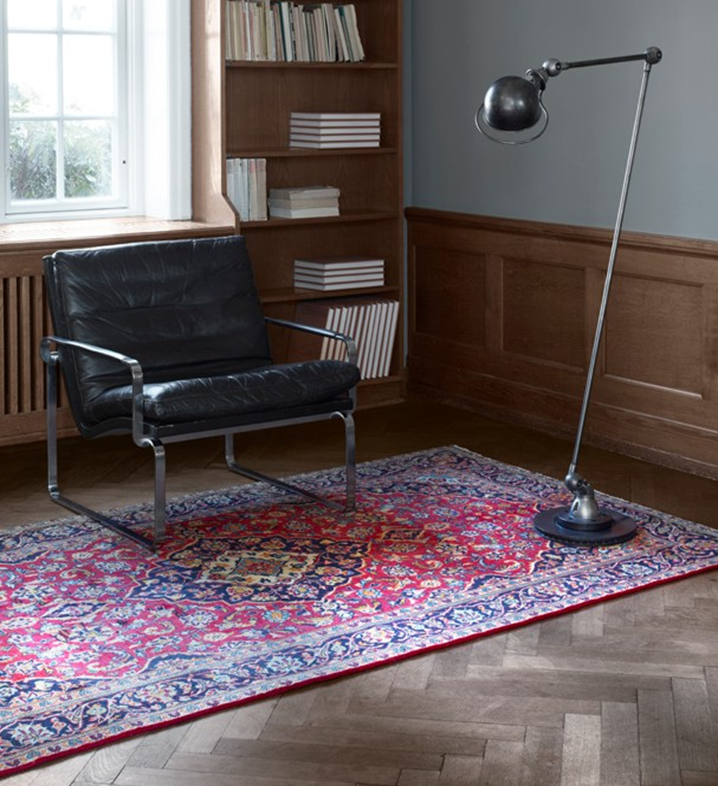
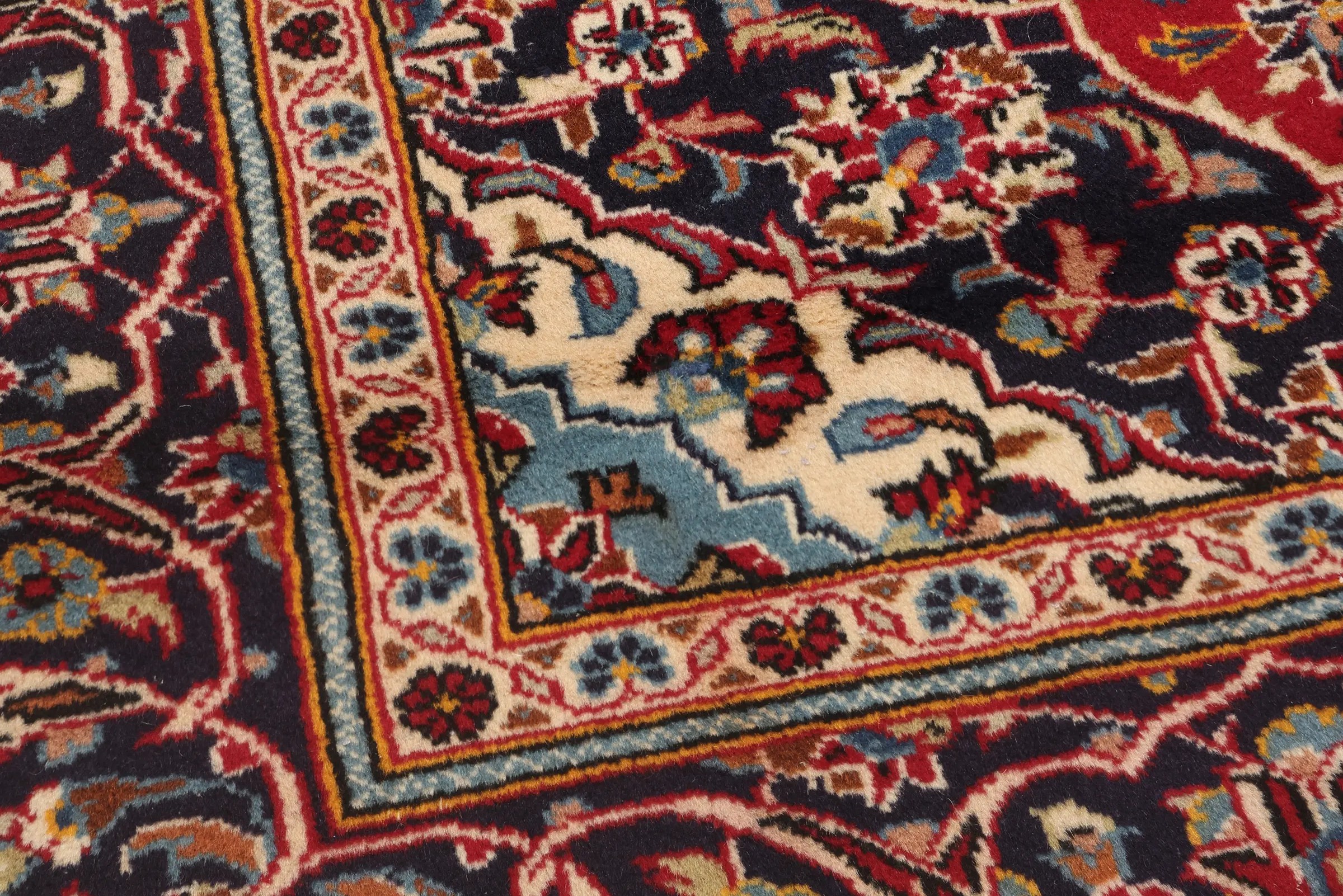
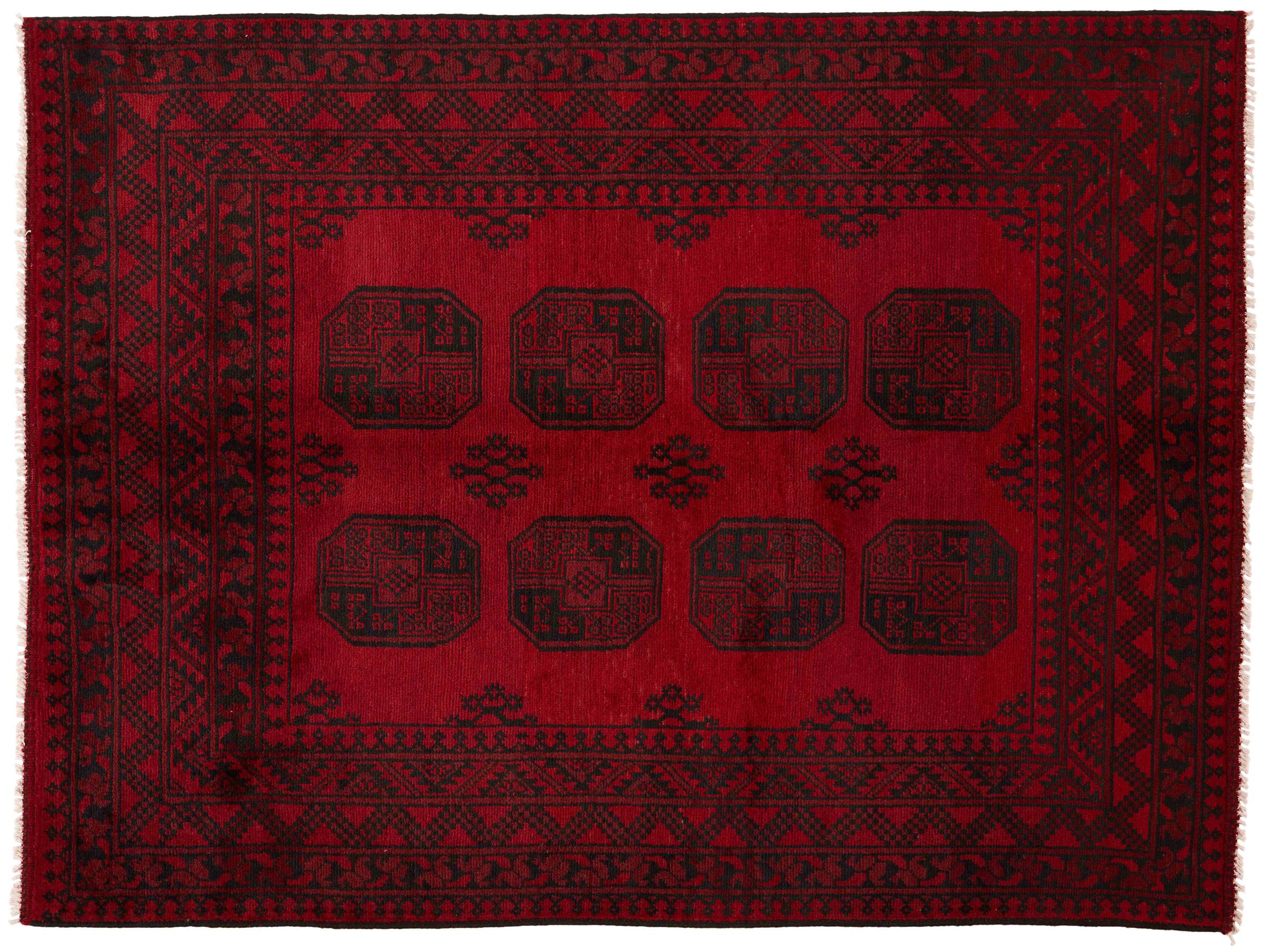
The design is usually centred around an ornate medallion, with its motifs often repeated in the corners. The remaining field is filled with meticulously arranged, lifelike flowers and vines. The main border is frequently decorated with the classic Herati motif, featuring a curved leaf form, while the secondary borders are adorned with rosettes. The most common ground colours are deep brick red and dark blue.

Keshan medallion designs are distinctive, alternating curved lines with right angles to create a unique visual rhythm. The most characteristic colour combination features a blue medallion set against a red field, complemented by details in other harmonious shades. The borders are equally distinctive: the main border is often framed by geometric bands, usually formed from small blue and red triangles.

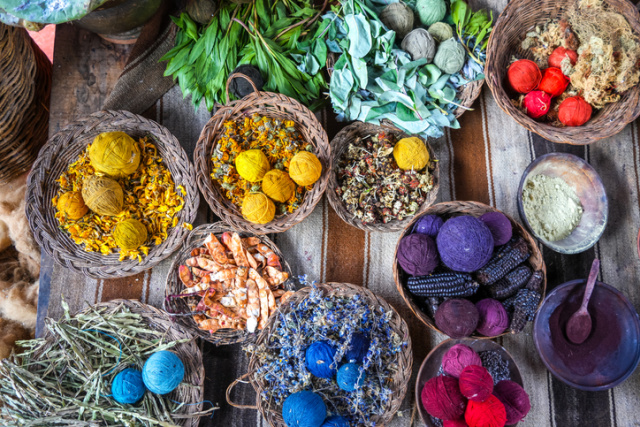
The rugs are made from wool or wool blended with silk, traditionally coloured with natural dyes such as indigo, carmine and pomegranate peel extract. Rather than fading over time, these colours develop richer, deeper tones as the rug matures and acquires a patina over the decades.

Keshan rugs typically have a knot density of between 150,000 and 250,000 knots per square metre, while finer Keshan Fine varieties can reach up to 450,000 knots. This high density ensures not only intricate detail but also exceptional durability. With proper care, a Keshan rug can be passed down through generations.

Keshan rugs are more than decorative objects; they embody the soul of Persian homes and play a central role in both everyday life and festive occasions. The central medallion can be interpreted as the symbolic centre of the universe, while the flowers and vines evoke the abundance of nature and the cycle of life. Every hand-knotted rug is a unique work of art, reflecting its maker’s worldview, sensitivity and masterful technical skill.

It is therefore unsurprising that Keshan rugs have also gained international recognition. From the 19th century onwards, they became highly sought after, particularly among European collectors and interior designers. An authentic hand-knotted Keshan rug offers more than aesthetic value; it can also be a significant investment, combining art and tradition in an enduring form.

Source: Jamal Abdul Naser
Owner of Kabiri Carpet
Persian Rugs

Browse our Persian rugs in our online shop.

Szeretne elsőként értesülni a legújabb híreinkről és linformációinkról?

Cikkeink hasonló témában

Aktscha rugs – Warm-toned classics of Turkmen tradition

Aktscha rugs are a living expression of Turkmen nomadic traditions, with every knot carrying the heritage of Central Asian rug culture. Their deep red ground and traditional gul motifs create a bold yet harmonious visual character. Each piece brings individuality and a sense of history into the home.

2-ply and 3-ply Pakistani rugs – Soft wool and harmonious oriental patterns

These rugs carry forward the refined legacy of Central Asian nomadic traditions, where the orderly simplicity of Tekke and Bokhara patterns meets Pakistani craftsmanship. Their warm colours and soft wool create a cosy, balanced atmosphere.

Afghan kilim rugs – Ancient nomadic weaving traditions in modern homes

Afghan kilim rugs represent one of the oldest forms of Eastern nomadic weaving tradition, featuring a flat, reversible construction and geometric patterns. Durable and easy to use, their natural materials make them a timeless choice for both modern and classic interiors.

Ezek érdekelhetnek még

Ez is érdekes lehet

Dyes used in oriental rugs

×
×

Cart