Blog

The origins and historical background of Keshan rugs
Keshan, also spelt Kashan, is a city of around 300,000 inhabitants in central Iran, situated along the historic trade route between Isfahan Province and Qom. The region has an extremely hot climate, especially during the summer months, which led to the traditional use of semi-subterranean homes that naturally provided a cooler indoor environment. Keshan has been a renowned centre of craftsmanship for centuries and remains one of the most important historical centres of Persian rug weaving.
Patterns, colours and structural characteristics
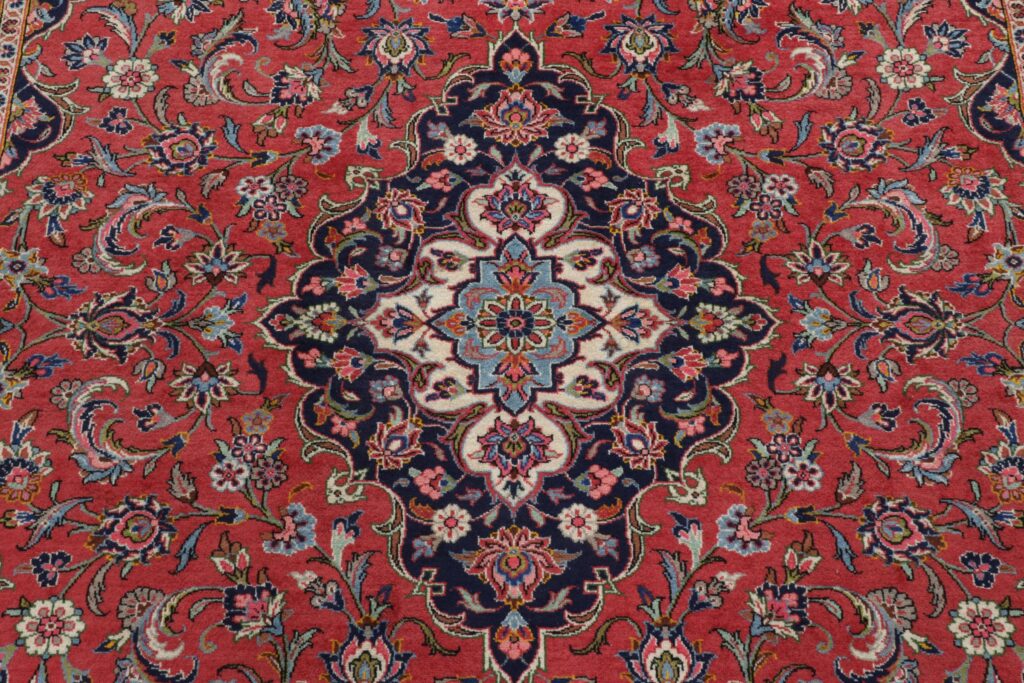
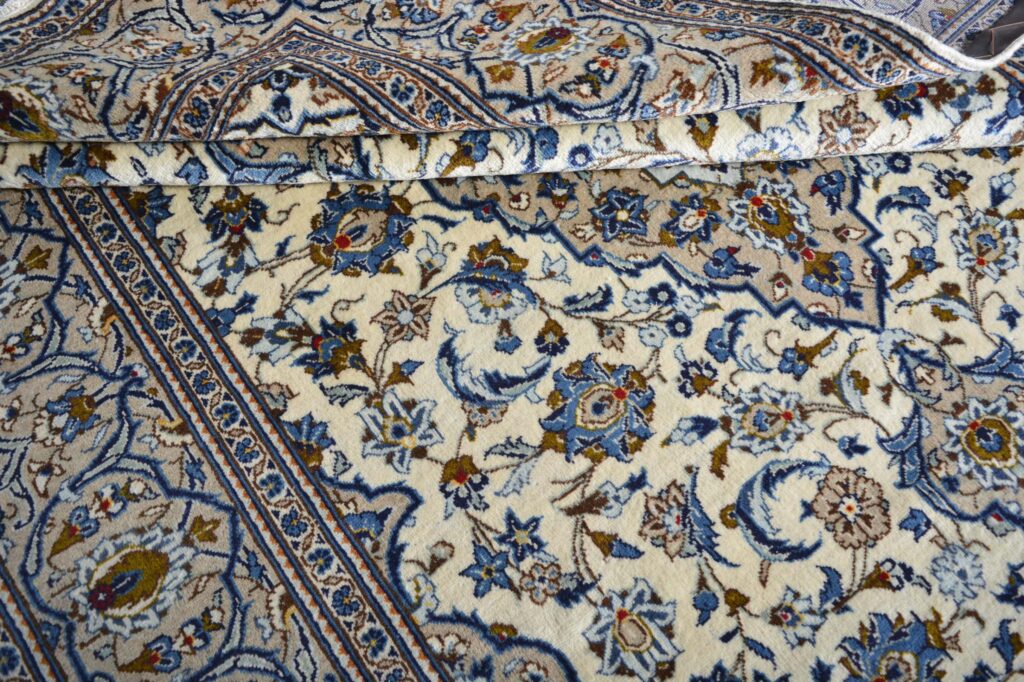
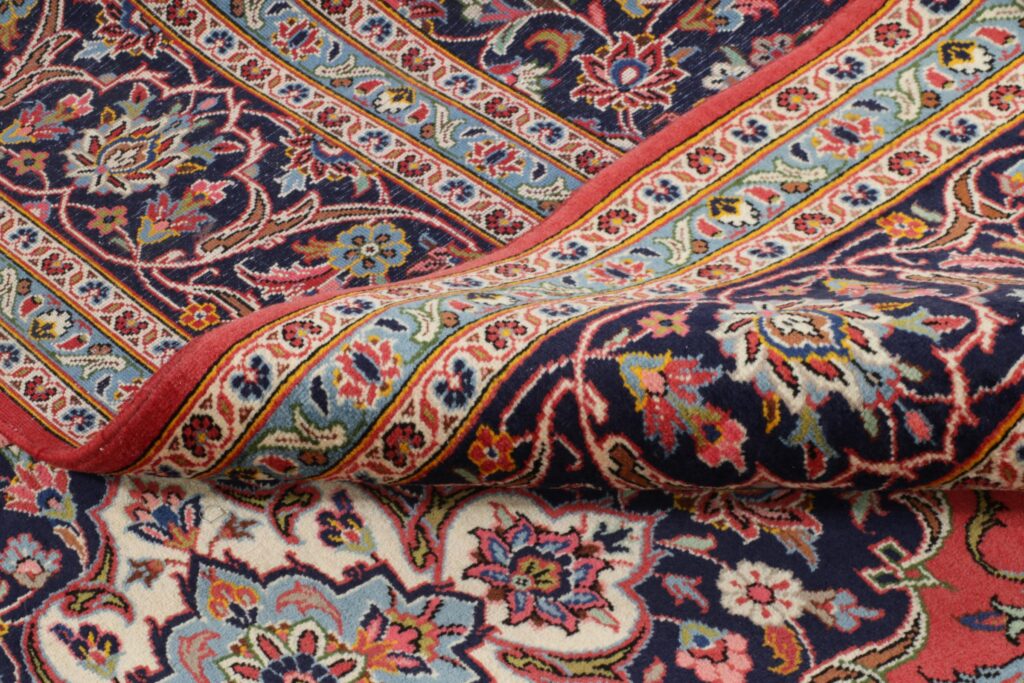
Keshan rugs are one of the most characteristic representatives of classical Persian rug art. The central element of their design is the medallion, around which densely arranged floral motifs, vines and vegetal ornaments are built. In the corners of the rug, elements of the central composition are repeated, creating a harmonious and enclosed structure. The borders feature the Herati motif, while the secondary guard borders are decorated with rosette patterns. The colour palette of Keshan rugs is traditionally defined by deep red and dark blue tones. In the classic arrangement, a blue medallion appears on a red field, complemented by finely detailed, multicoloured elements. The knot density generally ranges between 150,000 and 250,000 knots per square metre, although in the finer “Keshan Fine” pieces it can reach as high as 450,000 knots/m². One of the distinctive features of Keshan rugs is also found in the shape of the medallion itself: it is built from alternating curved lines and right angles, giving the rug a unique and easily recognisable character. The borders are carefully composed, often with geometric patterns formed by alternating blue and red triangles.
Which rooms are Sarough rugs recommended for?
Thanks to their classic and elegant appearance, Keshan rugs are particularly well suited to formal interiors. They look especially impressive in living rooms, dining rooms, larger entrance halls and reception rooms, where the rug can serve as a central decorative feature. Their richly detailed floral patterns and medallion structure make them ideal for classic, antique-style and traditional interiors, while in modern settings they create a strong visual focal point. Dark blue and red tones bring warmth and elegance to the room, especially when paired with wooden furniture and natural materials. Thanks to their durable construction, Keshan rugs are suitable not only as decorative pieces but also for everyday use, making them a reliable and lasting investment.
The value and distinctive qualities of Keshan rugs
This rug type is one of the most iconic representatives of Persian rug making. With their classic medallion compositions, rich floral motifs and harmonious colour palettes, Keshan rugs have played a prominent role in oriental rug culture for centuries. Herati-patterned borders and carefully detailed guard borders further enhance their aesthetic value, while the precision of hand-knotting ensures durability and timeless appeal. Every piece is a work of craftsmanship that reflects some of the finest qualities of traditional Persian textile art. A well-chosen Keshan rug is not merely an interior furnishing but also part of a cultural heritage capable of shaping the atmosphere and character of a space for many years.

Source: Jamal Abdul Naser
Owner of Kabiri Carpet