Blog
The origins and characteristics of Moud Mahi rugs
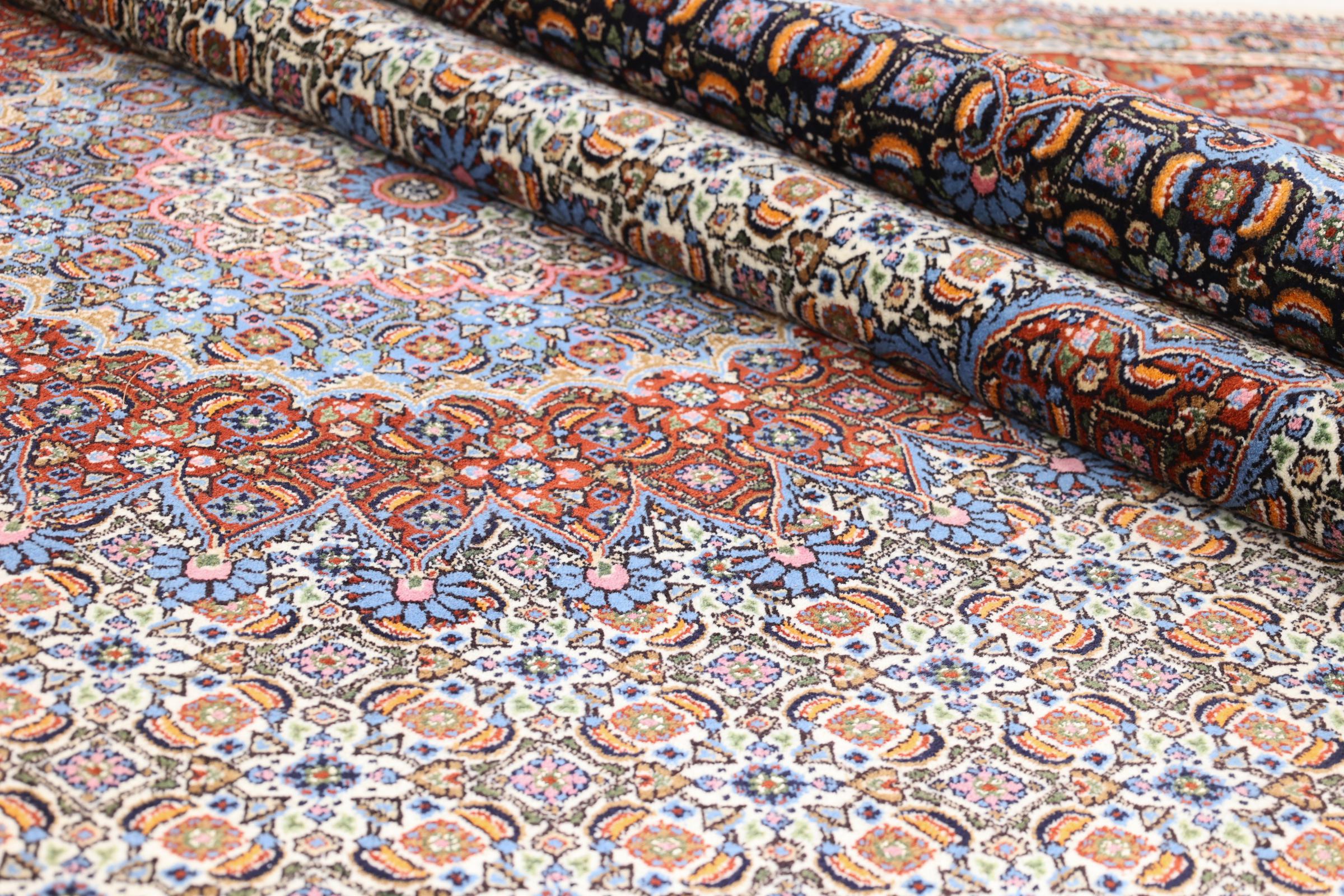
Moud is a small Iranian town located south of Mashhad in the historic Khorasan Province. The region has played an important role in Persian rug making for centuries, and Moud rugs remain among its best-known creations. They owe their reputation to their consistent quality, refined patterns and excellent craftsmanship. Moud Mahi rugs generally have a knot density of 250,000 to 350,000 knots per square metre, providing richly detailed designs and a long lifespan. The warp and weft are usually made from cotton, while the pile consists of high-quality wool.
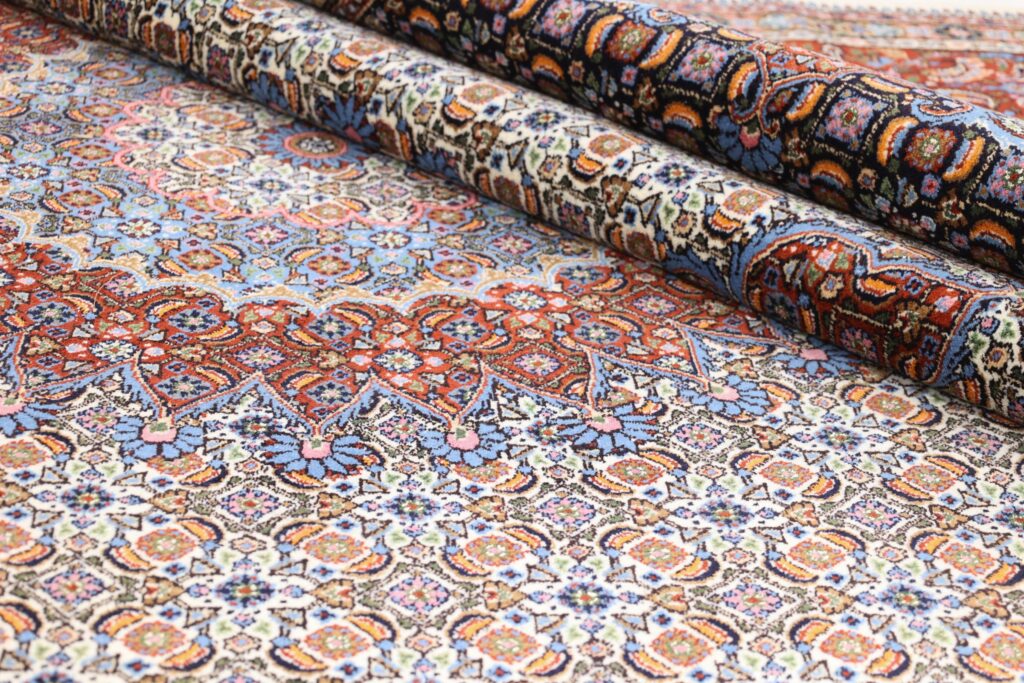
The Mahi pattern and colors
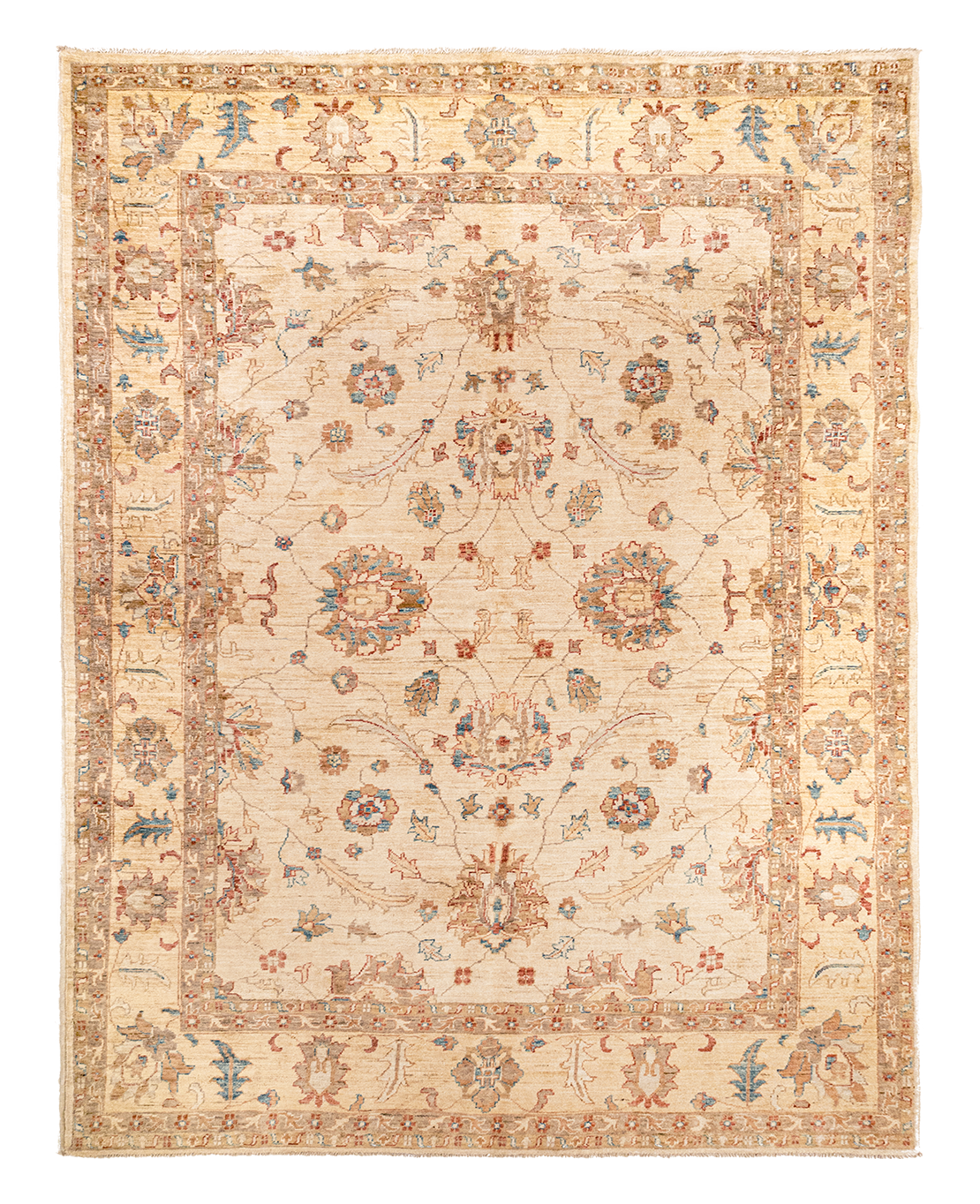
The border design often features an evolved version of the traditional oriental “turtle” motif, elegantly framing the central composition. One of the most distinctive features of Moud rugs is the famous Mahi pattern, widely recognised as a classic oriental rug design. The word “mahi” means fish in Persian, and the small repeating elements resemble stylised fish. This motif may cover the entire surface of the rug, although designs with a central star- or hexagon-shaped medallion are also common. Moud Mahi rugs typically feature shades of beige, light red, blue and ivory, creating an elegant and harmonious overall effect.
Which rooms are Moud Mahi rugs recommended for?
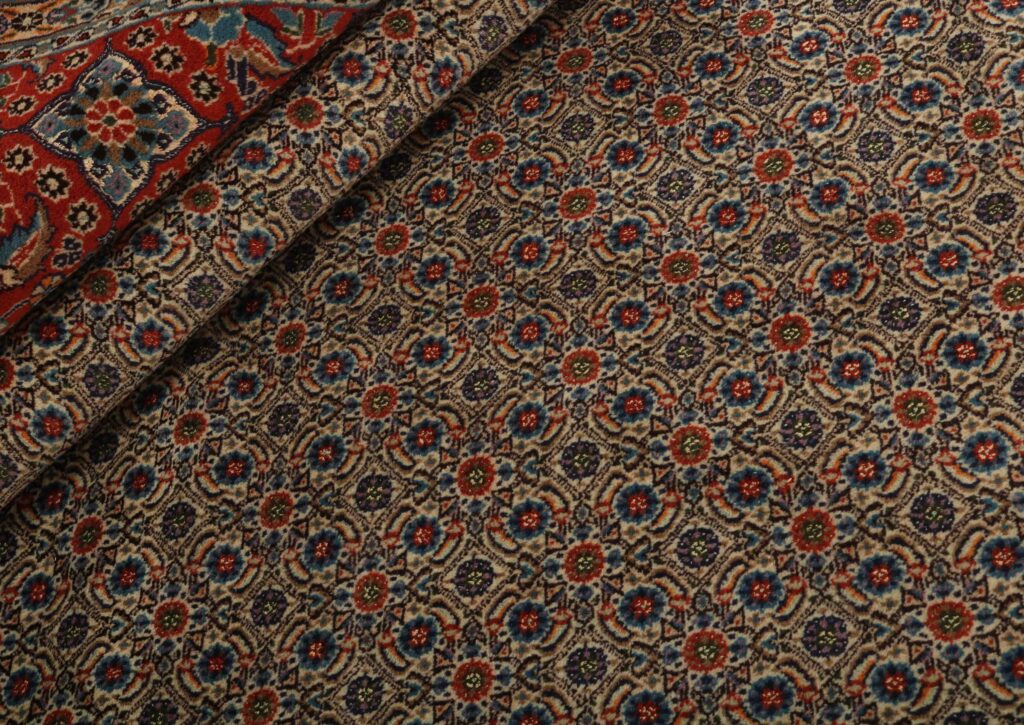
Thanks to their balanced patterns and understated colour palettes, Moud Mahi rugs are exceptionally versatile. They look equally impressive in living rooms, dining rooms, studies and bedrooms, where their richly detailed designs add elegance without becoming overly dominant. Beige and light-toned models are particularly well suited to both classic and modern interiors. They create a harmonious overall look with traditional furniture, while in contemporary settings their delicate patterns provide a pleasing contrast with clean-lined forms. Thanks to their durable construction, Moud Mahi rugs also perform well in regularly used rooms. They are therefore an excellent choice for anyone seeking not only a decorative hand-knotted Persian rug, but also one that remains reliable and retains its value over the long term.
The value and distinctive qualities of Moud Mahi rugs
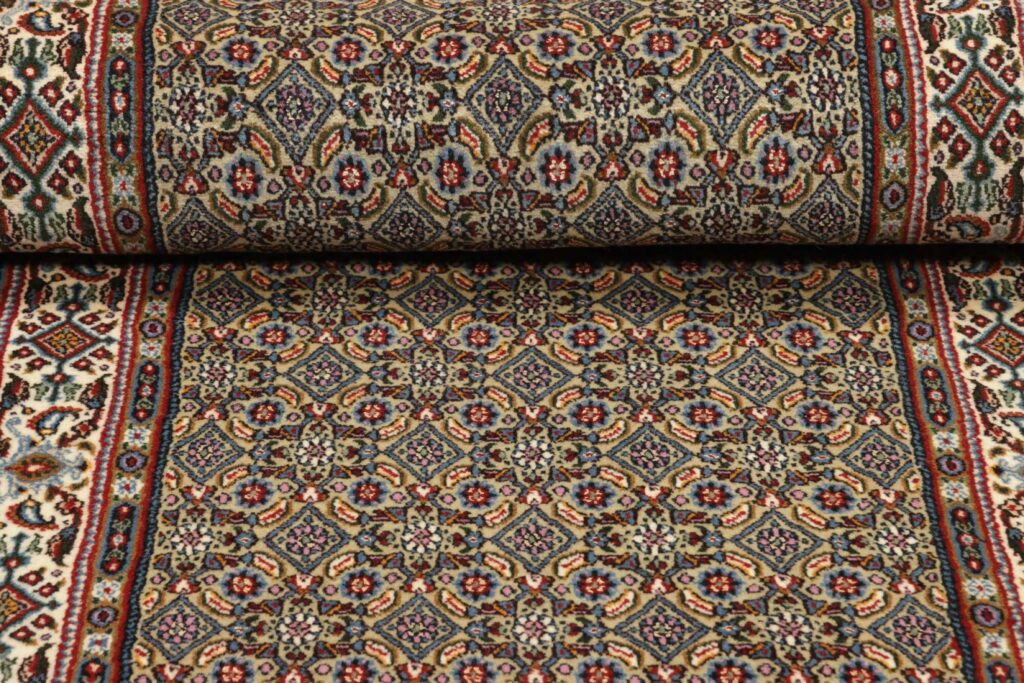
One of the greatest strengths of Moud Mahi rugs is the exceptional consistency that characterises the region’s rug-making tradition. Their patterns, knotting quality and proportions are remarkably uniform, making these rugs easy to recognise among the wide variety of Persian rugs. This consistent quality is also one reason why Moud designs have been widely imitated in many countries around the world.
The Mahi motif is one of the best-known and most timeless patterns in Persian rug art. Its enduring popularity across generations comes from its combination of rich detail, harmony and exceptional elegance. As a result, Moud Mahi rugs never go out of style and work well in almost any interior design setting.
A Moud Mahi rug is therefore an ideal choice for anyone wishing to bring one of the most recognisable patterns of classic Persian rug culture into their home. Thanks to its timeless beauty, high quality and harmonious appearance, it can remain one of the most valuable decorative features of a living space for many years.
Source: Jamal Abdul Naser
Owner of Kabiri Carpet