Blog
The origins and characteristics of Kashmar rugs
Kashmar is a city in north-eastern Iran, in Razavi Khorasan Province, near the Shesh Taraz River. It has been an important centre of craftsmanship for centuries. Formerly known as Torshiz, the city already had a significant rug-making tradition by the 13th century. According to some sources, the region’s weaving expertise was introduced by the master weaver Mohammad Kermani from Kerman Province, laying the foundations for the development of Kashmar rug art.
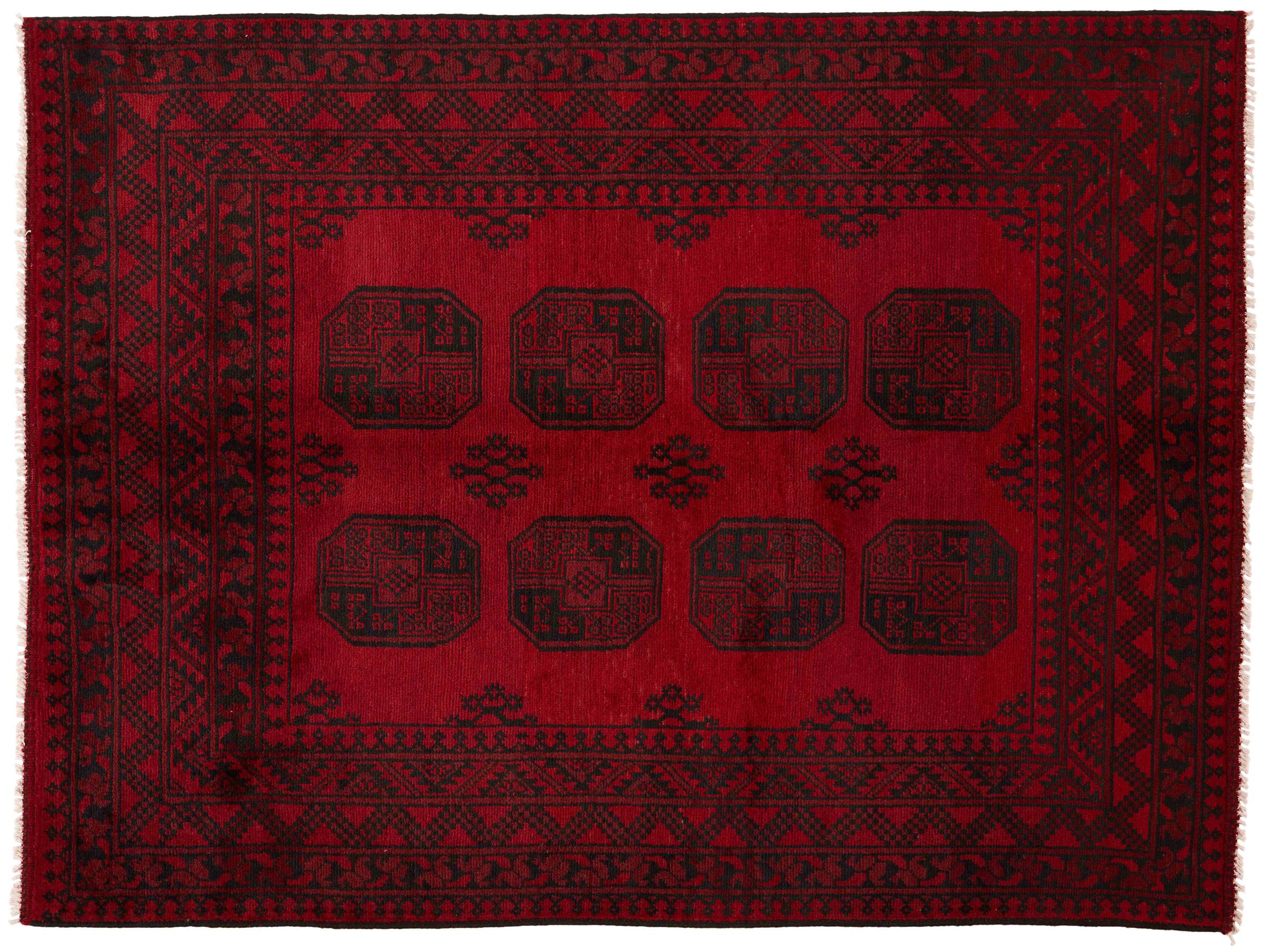
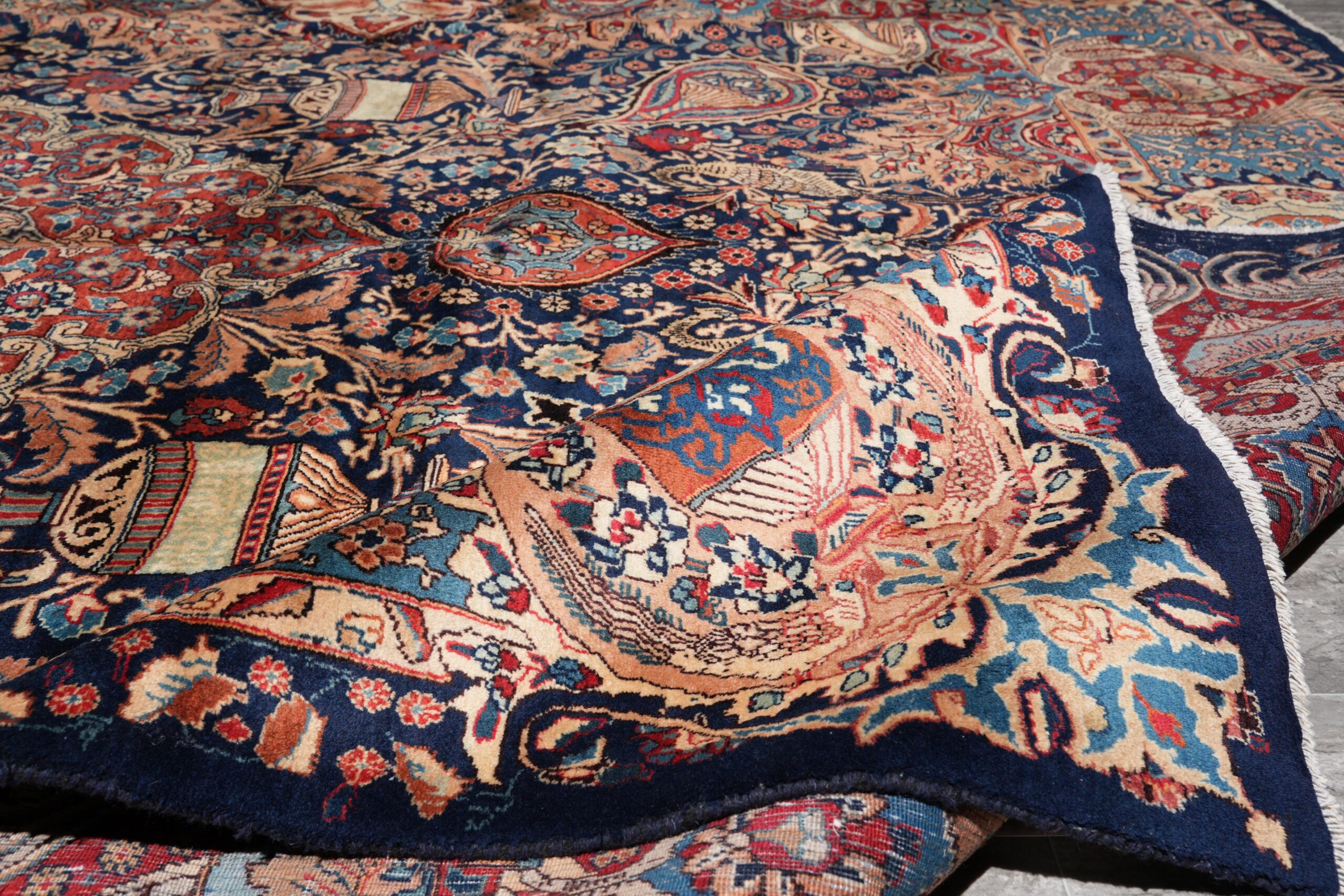
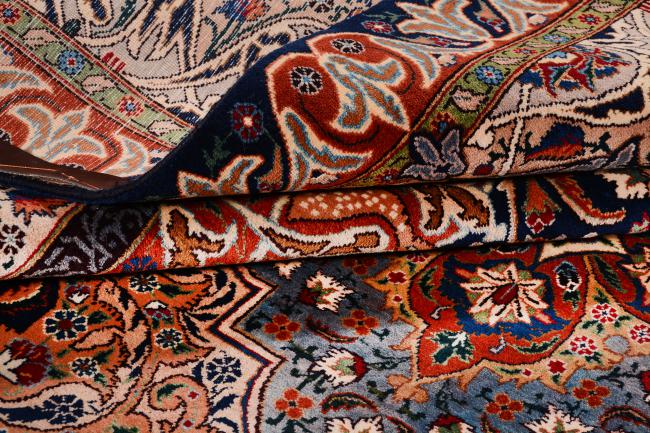
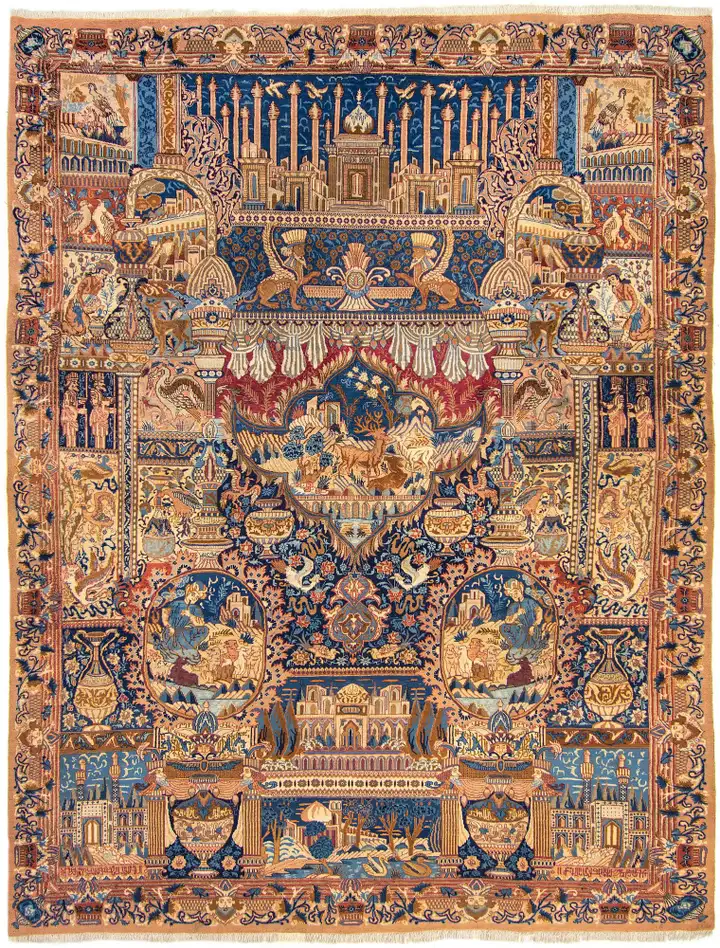
Kashmar rugs are distinguished by their richly detailed, narrative designs. Landscape-like compositions and hunting scenes are common, evoking local culture, traditional ways of life and seasonal hunting rituals. Their colour palette is defined by deep red, blue, beige, champagne and orange tones, creating a warm and richly layered overall effect. The knot density typically ranges from 150,000 to 250,000 knots per square metre, providing a suitable foundation for detailed, story-like imagery. Kashmar rugs are now considered relatively rare and are often made in larger sizes, which further enhances their distinctive character and collector value.
Interior design tips and recommended uses
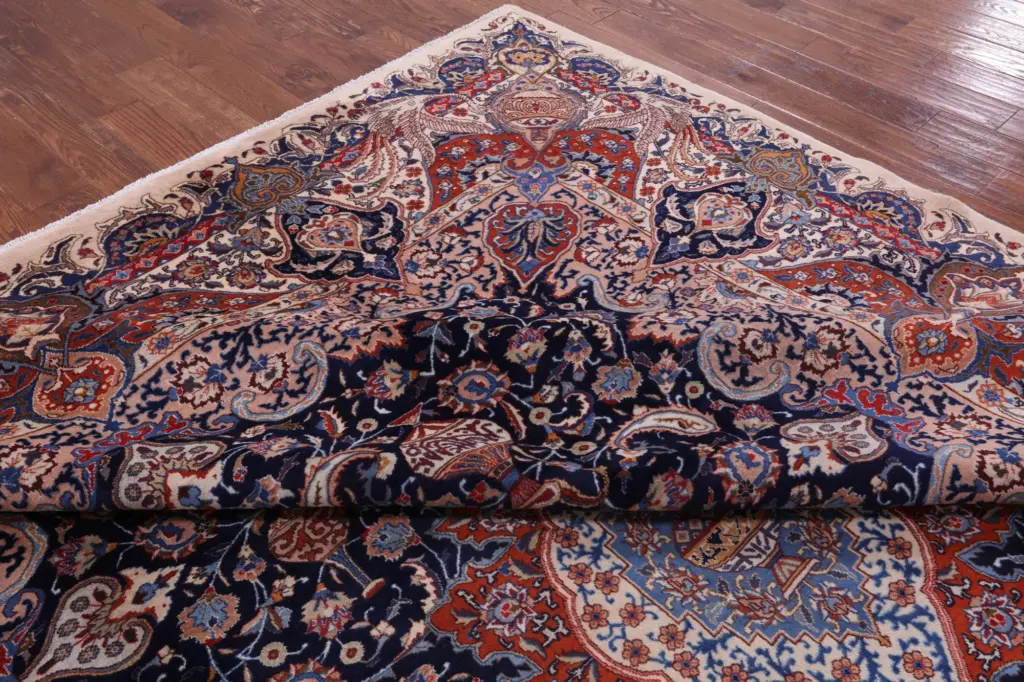
Thanks to their powerful, narrative designs, Kashmar rugs work particularly well in spacious interiors where their details can be fully appreciated. They are ideal for large living rooms, dining rooms, formal reception areas and even office spaces, where the rug can serve as a striking visual focal point. Interior design tip: Kashmar rugs featuring landscapes and hunting scenes look their best when the other elements of the room remain understated. Against neutral walls, clean-lined furniture and natural materials such as wood, leather and linen, the rug becomes the room’s central storytelling element. Classic medallion-style Kashmar rugs with Keshan influences also suit traditional interiors, adding elegance and a warm oriental atmosphere. Their large size makes them especially suitable for visually defining different zones in open-plan living areas.
The value and distinctive qualities of Kashmar rugs
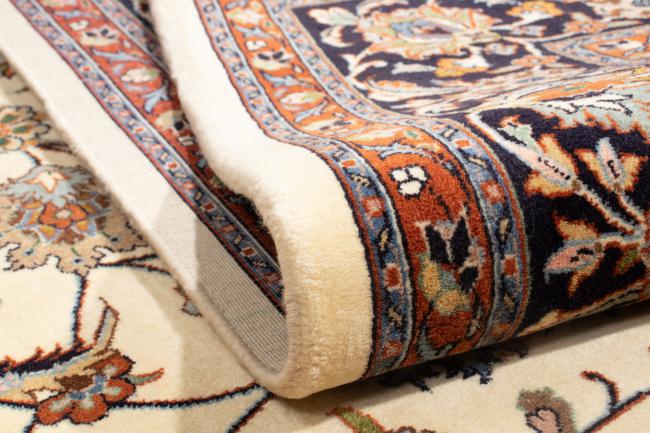
One of the greatest qualities of Kashmar rugs lies in their rarity and visual richness. Their landscape and hunting motifs are more than decorative elements; they are visual records of local culture and historical traditions. The combination of traditional Persian weaving techniques and narrative compositions gives these rugs a distinctive place in the world of oriental rugs. As they are now produced less frequently, the collector value of Kashmar rugs continues to increase. A Kashmar rug is therefore not only an interior furnishing but also a visual story that carries forward one of the most fascinating narrative traditions in Persian culture.
Source: Jamal Abdul Naser
Owner of Kabiri Carpet