Blog
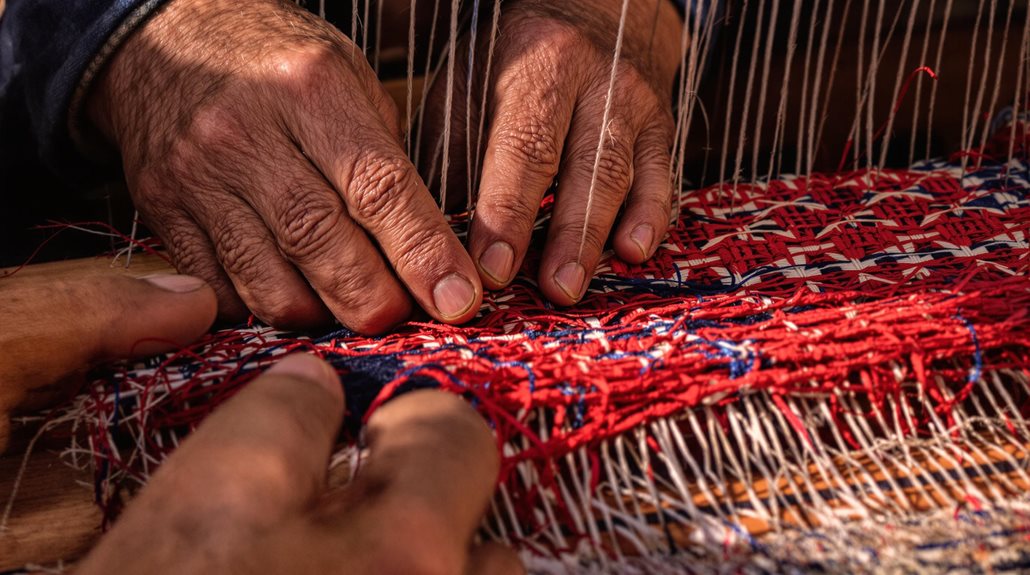
In the Central Asian regions examined here, two main types of knots are used to attach the pile yarn to the warp threads.
Knotting techniques of handmade rugs
I. Symmetrical knotting
In the Central Asian regions discussed here, two main knotting techniques are used. One is the symmetrical knot, also known as the Ghiordes or Turkish knot.
The symmetrical Turkish knot wraps around two warp threads, with the wool yarn emerging between them to create the pile surface. This technique is especially common among nomadic rug makers. It produces relatively loose knots that take up more space.
As shown in the illustration above, the knots are generally tied around two warp threads, although this is not an absolute rule. The diagram also shows the jufti, or double-knotting, technique, which wraps around four warp threads and is mainly found in Persian regions. Using four warp threads allows faster production, reducing both knot density and working time by around 50%.
With this method, the knots are tied around the first and third warp threads in one row, then around the second and fourth in the next. In jufti knotting, successive rows usually use the same pairs of warp threads. In some Afghan, Turkmen and Kurdish regions, however, offset or diagonal knots are used, as shown in the two illustrations above.
The other main knotting technique is the asymmetrical knot, also known as the Senneh or Persian knot. The older terms “Turkish” and “Persian” can be confusing for people who enjoy oriental rugs but do not have specialist knowledge. Both knot types became established in these geographical regions centuries ago. For this reason, it is perfectly possible to find a rug made in the Persian city of Senneh that uses Ghiordes, or Turkish, knots.
II. Asymmetrical knotting
The asymmetrical “Senneh” or Persian knot requires relatively less space. In this structure, the warp threads lie very close to one another. A classic asymmetrical knot completely wraps around one warp thread, while only passing around the other.
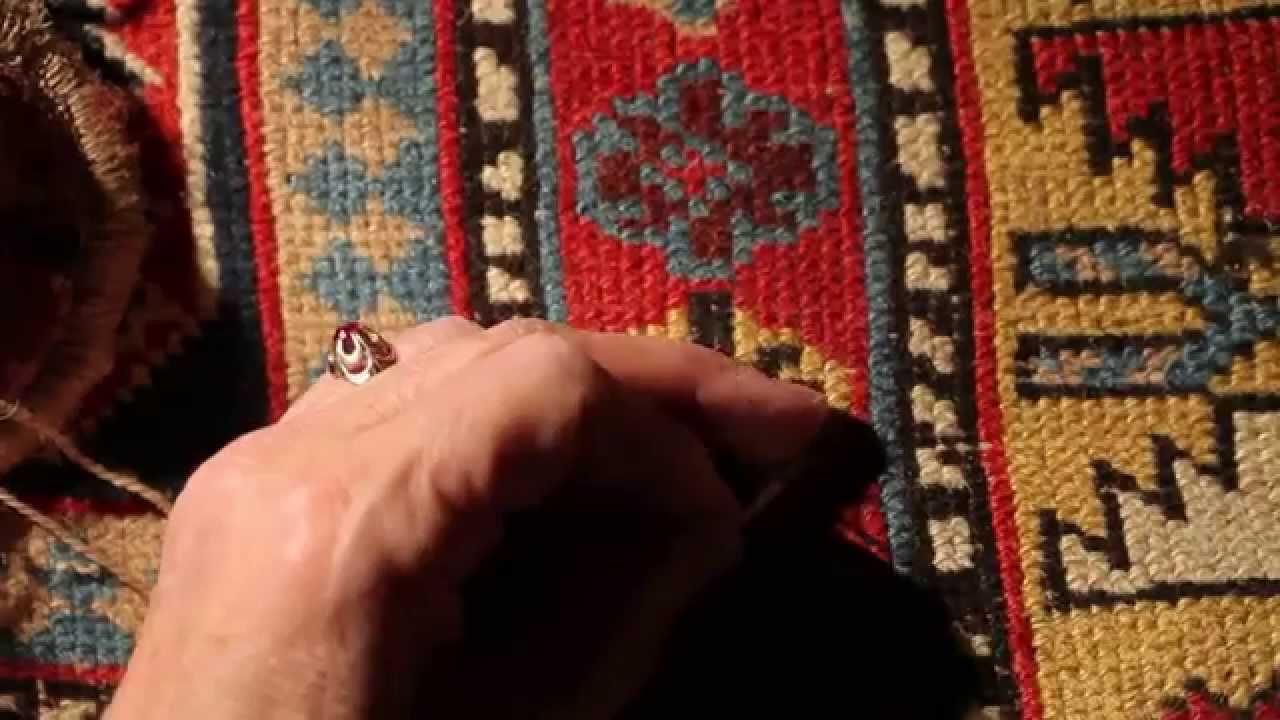
There are two basic forms of the classic asymmetrical knot. They are distinguished by whether the yarn ends opposite the loop fall to the right or to the left.
Unlike the symmetrical Ghiordes, or Turkish, knot, where knots are less commonly arranged on two different levels, asymmetrical Senneh, or Persian, knotting often uses warp threads under different levels of tension. This separates neighbouring warp threads and can create a ribbed surface. The effect adds further depth to the rug’s colours and pattern.
The jufti or jufti-type knots tied around four warp threads, described earlier in relation to symmetrical knotting, also appear in asymmetrical knotting. The diagrams below show some of their typical variations.