Blog

Written by Antal Kunvári
It is true: the history of oriental rugs stretches back thousands of years. One famous example dates to around 500 BC. This beautiful rug was found in the tomb of a Scythian princess in the Altai Mountains of Siberia. It became known as the Pazyryk rug.
The level of skill used to create it clearly shows that rug weaving had already developed much earlier. Because most rugs were made from wool, many thousands disappeared over the centuries and millennia.
More recently, linen rugs were discovered in Egypt in the tomb of Kha. They survived in almost complete condition. These rugs date to around 1500 BC, making them roughly 1,000 years older than the Pazyryk rug mentioned above.
We also know many knotted and woven rugs from the period between the 5th and 16th centuries AD. A large number come from the Christian and Coptic cultures of Egypt and Nubia. Many of these date from between the 6th and 9th centuries.

The earliest surviving Turkish rugs date from the Seljuk period, between the 12th and 14th centuries. Many Spanish rugs have also survived. The Moors made them, so they belong to the Islamic weaving tradition.
One final point of interest concerns the Ardabil Carpet. It is one of the best-known historic Persian rugs and is now kept at the Victoria and Albert Museum. A pair of badly damaged rugs reached England in 1873.
Experts decided to sacrifice one rug so they could restore the other. The cost was too high even for the museum, so public donations helped fund the work.
The result fully justified the international effort.
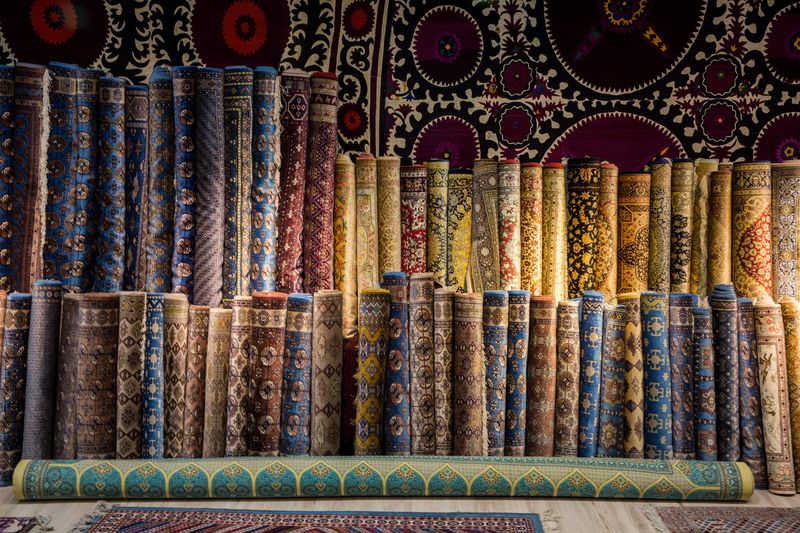
The rug measures more than 10 metres in length and 7 metres in width. It is an exceptional piece, woven around 1539 during the reign of Shah Tahmasp, a great patron of rug weaving. The inscription on the rug also includes the name of the household servant who made it.
/To be continued/