Blog
Nain is a city of around 50,000 inhabitants in central Iran, in Isfahan Province, on the edge of the vast and harsh Dasht-e Kavir Desert. Its strategic and historical importance is considerable: for centuries, it served as a key stop along caravan routes before travellers began the demanding desert crossing.
The city’s traditional industry centred on the production of woollen clothing. However, when demand for these goods declined, local artisans turned their attention to rug weaving. The transition soon proved successful. Thanks to refined techniques, high-quality materials and the artistic skill of local weavers, rugs from Nain quickly gained recognition and became highly sought after both in Iran and internationally.

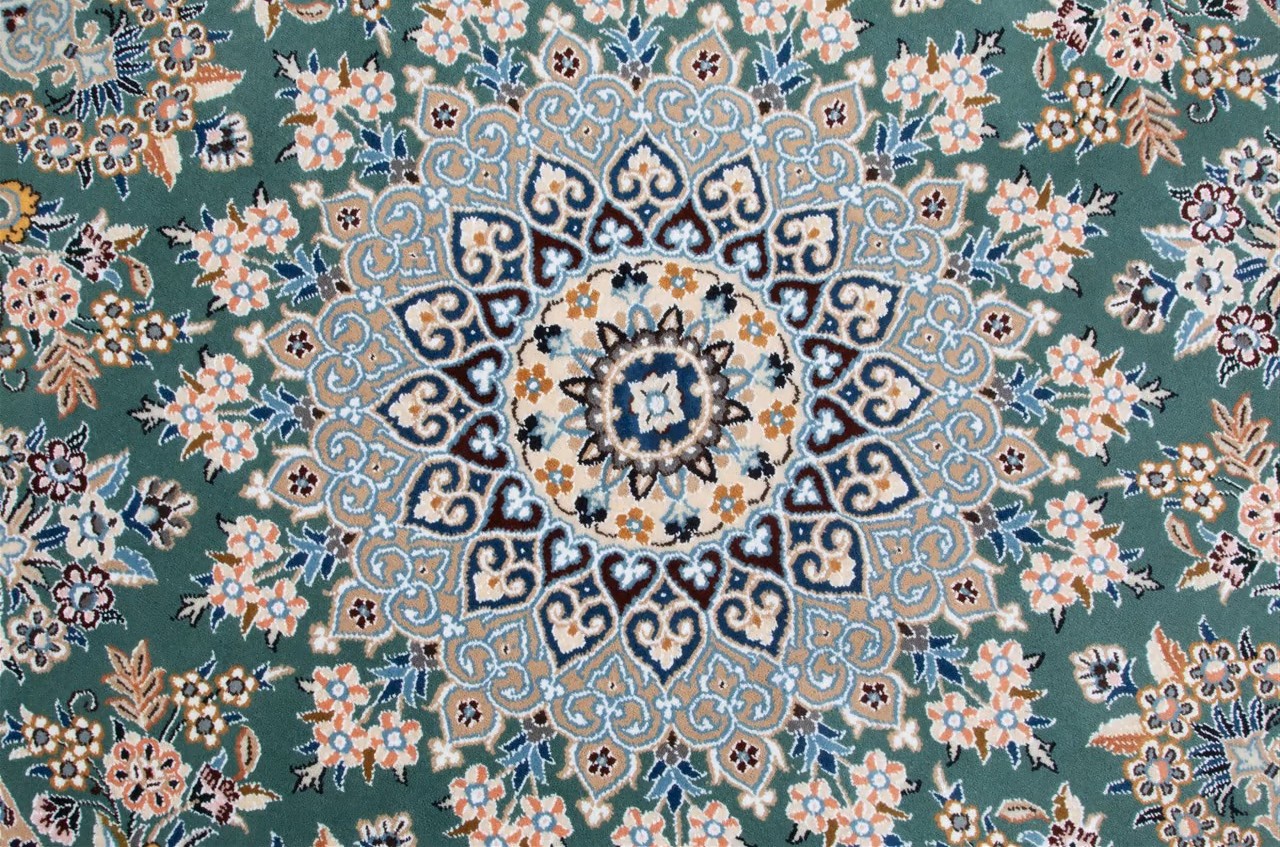
The structure of Nain rugs is refined and enduring. Their warp and weft threads are made from cotton, while the pile consists of high-quality wool, often with contours highlighted by silk. Some especially valuable pieces also incorporate silk into the foundation, enhancing their lustre, durability and luxurious character.
Their colour palette is elegant and understated, often dominated by ivory, off-white and cream, with subtle accents of red, green or blue. Their designs follow traditional Persian motifs and are often closely related to the style of Isfahan rugs. Symmetrical compositions, floral patterns, arabesques and stylised medallions are among their defining features.
Nain rugs are produced in a wide range of sizes, from smaller decorative pieces to monumental rugs exceeding 60 square metres, some of which are made entirely from pure silk. The largest Nain rug ever created measured an impressive 20 × 20 metres.

One of the most important indicators of quality in Nain rugs is knot density, according to which they are classified into four main categories: 4La, 6La, 9La and 12La. The term “La”, a Persian word meaning layer or strand, refers to the number of yarn strands found within one inch, or 2.54 centimetres. The lower the number, the denser the knotting, the finer the pattern and the more valuable the rug.
4La pieces can exceed one million knots per square metre, so it is no surprise that these masterpieces are especially sought after by collectors and connoisseurs. Creating such a rug often takes many months or even years and reflects the work of only the most highly skilled artisans.
Fathollah Habibian is regarded as the father of Nain rug weaving, and his name has become synonymous with the finest craftsmanship. Original Habibian rugs are exceptionally rare and rank among the most valuable pieces on the market.
Source: Jamal Abdul Naser
Owner of Kabiri Carpet