Blog
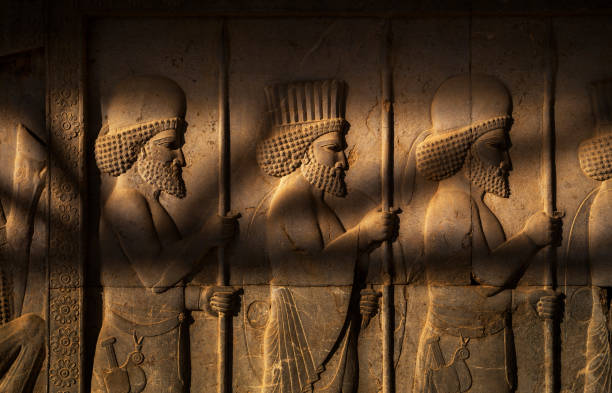
Source: Wikipedia
The Persians (Persian: پارسیان) are one of the Iranian peoples whose native language is Persian. They make up around 61–65% of the population of present-day Iran.
The name Iran is derived from the plural form of the word “Aryan” and refers to Indo-Iranian peoples. The population of modern Iran is the result of extensive ethnic mixing. Before 1935, the country was known in the West as Persia, and its citizens were officially referred to as Persians.
From an anthropological point of view, Persians are generally described as being of medium height, with more or less dark skin, dark hair, and brown or black eyes. (This differs from the Kurds, who also belong to the Iranian peoples. Among them, taller individuals are more common, and blue eyes and blond hair can also occur.)
The word Persian comes from the term parsa, meaning horseman.
The Persian language, also known as Farsi (Persian: فارسی), belongs to the Iranian branch of the Indo-Iranian languages within the Indo-European language family. It is generally divided into Old Persian, Middle Persian (Pahlavi), and New Persian.
Modern Persian developed from one of the Middle Persian dialects, although the relationship between Middle Persian and Old Persian is not entirely clear. Around 70 million people in Iran speak New Persian as either a first or second language. Following the Arab conquest in the 7th century AD, many Arabic words entered the language.
The Indo-Iranian tribes who populated Iran and northern India, and who called themselves Aryans, separated into three major groups around the middle of the 2nd millennium BC. The Indo-Aryans entered the Indian subcontinent through the plains of Punjab. The Medes settled in the north-eastern part of the Iranian Plateau, while the Persians established themselves on its south-western slopes.
The Persians were a horse-riding people, like their relatives the Medes, but they lived further south. Rather than settling around present-day Tehran, they inhabited the mountains and plateaus rising above the eastern coast of the Persian Gulf.
The first Persian tribes appeared south of Lake Urmia in the 9th century BC. They later moved further south, where the region’s former rulers, the Elamites, were no longer strong enough to prevent Persian settlement.
The Medes, who lived further north, established a powerful empire in the 8th century BC. One of its vassal provinces was Parsua, the territory of the Persians, who were closely related to the Medes.