Blog
An article from 444.hu
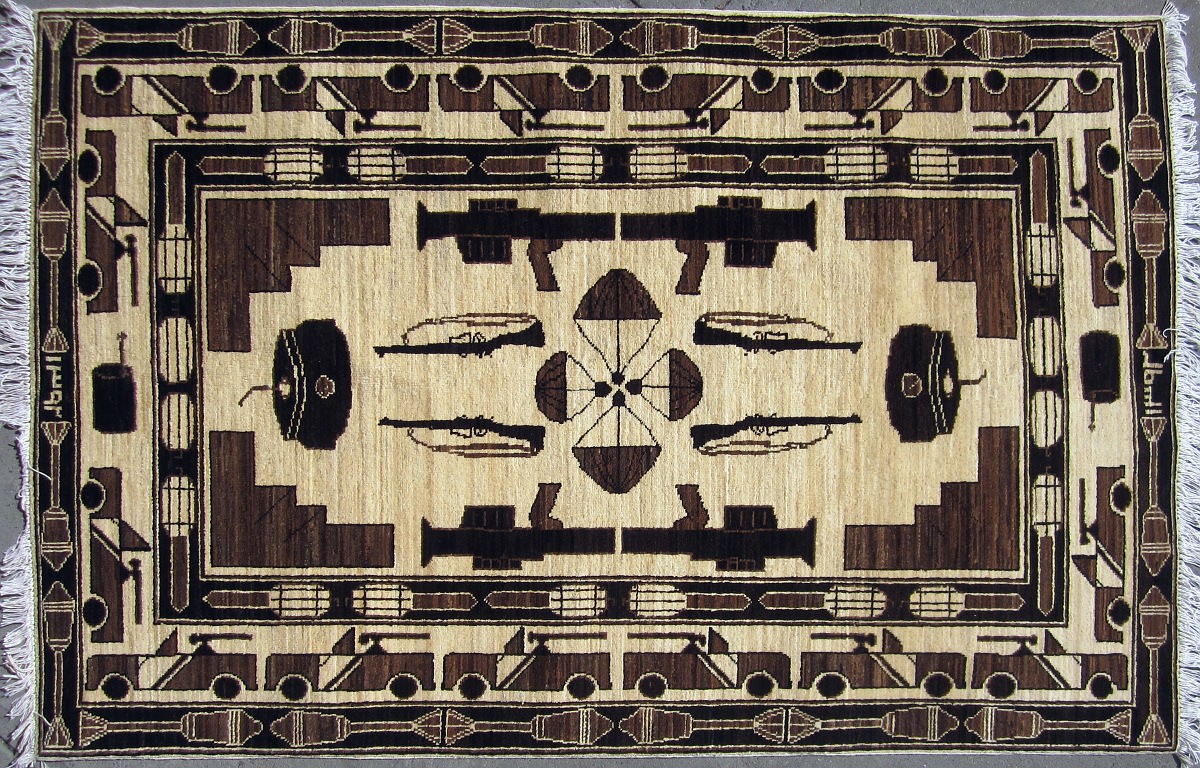
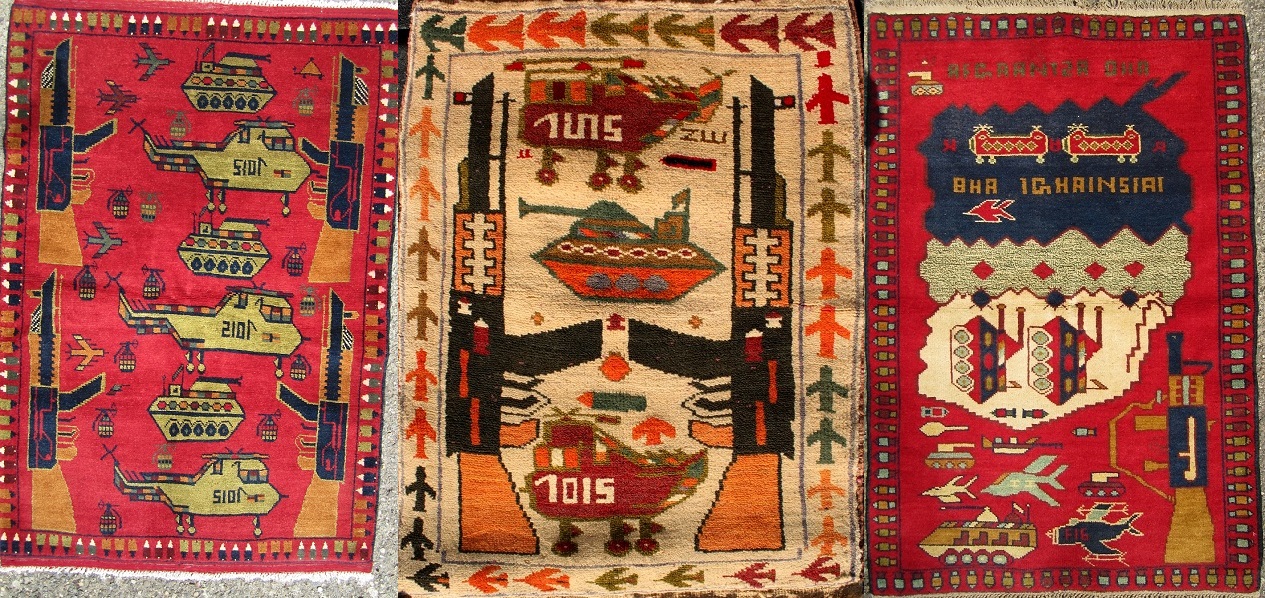
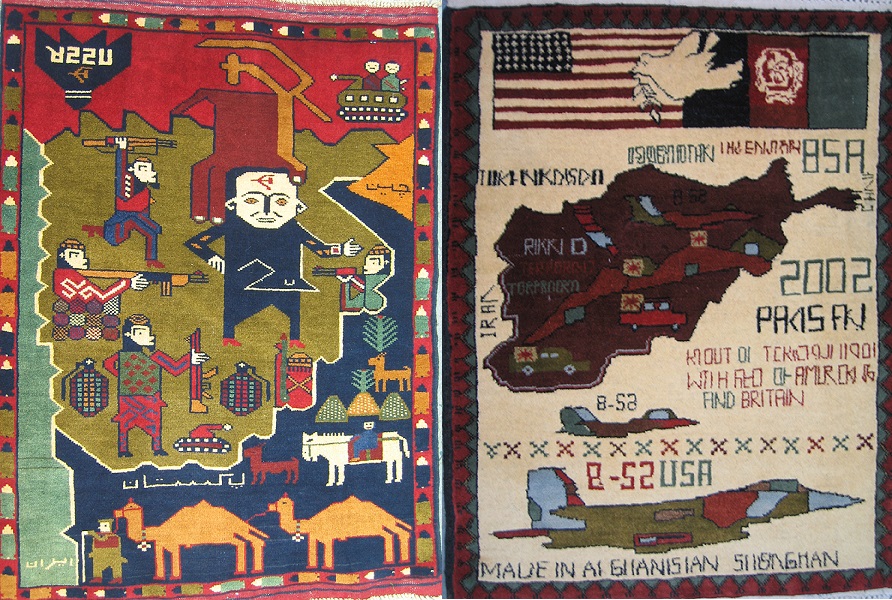
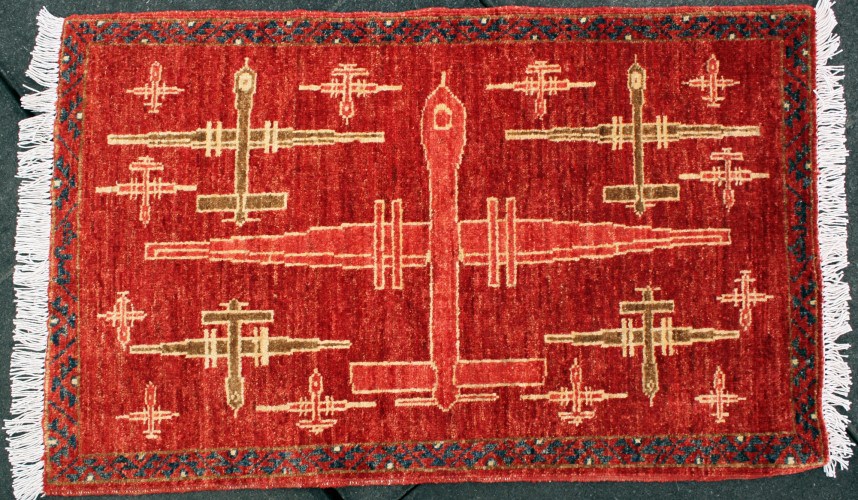
After the Soviet invasion of 1979, Afghan rug weavers began depicting modern military technology in their work. Alongside tanks, Kalashnikov rifles and helicopters, drones have now also appeared in woven designs.
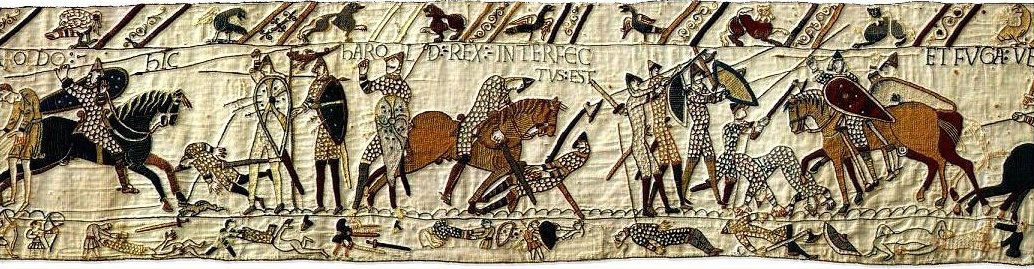
Of course, the appearance of the most advanced military technology of an era in textile and tapestry art is nothing new, as the Bayeux Tapestry demonstrates. The roughly 70-metre-long tapestry was probably made between 1070 and 1082 and tells the story of the Norman conquest of England in 1066 in remarkable detail. Its makers carefully documented the Normans’ equipment and weapons.
A
Detail from the 70-metre-long, 11th-century Bayeux Tapestry. King Harold II of England falls at the Battle of Hastings. (Photo: Wikipedia)
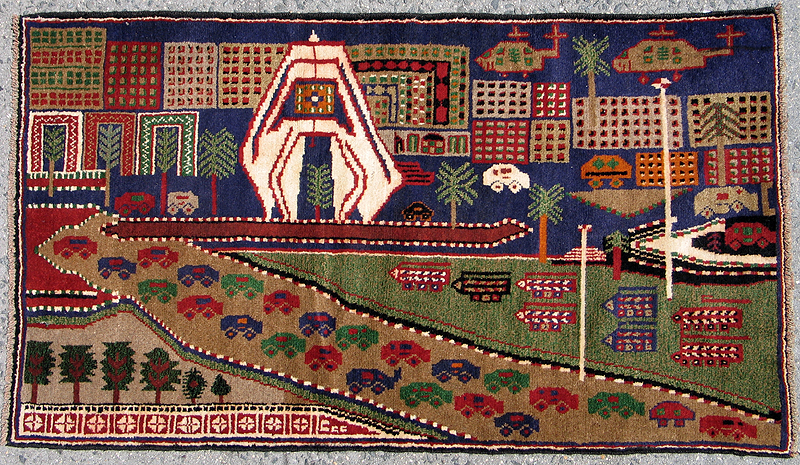
After the terrorist attacks of 11 September 2001 and the US-led war against the Taliban and Al-Qaeda, the Twin Towers also began to appear in rug designs.
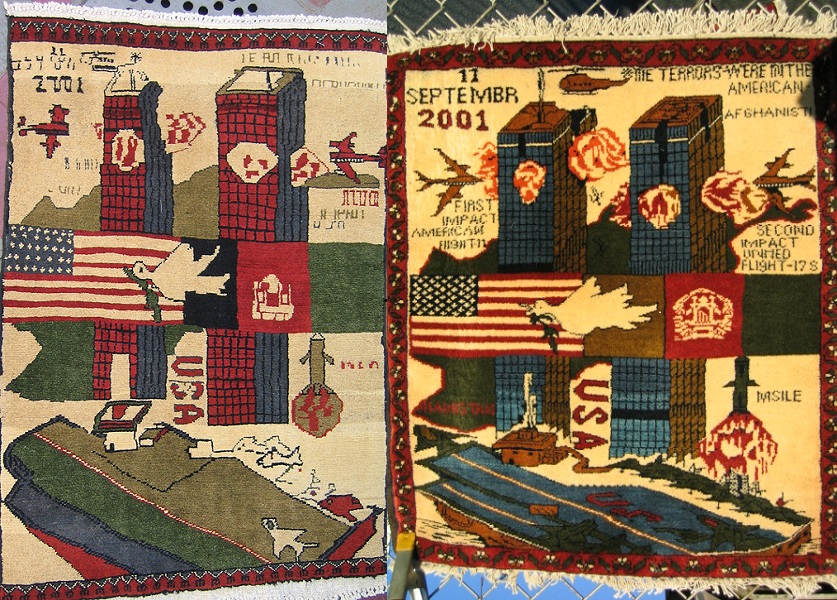
Twin Towers. Photo by Kevin Sudeith, courtesy of warrug.com. More Twin Towers. Photo by Kevin Sudeith, courtesy of warrug.com.